
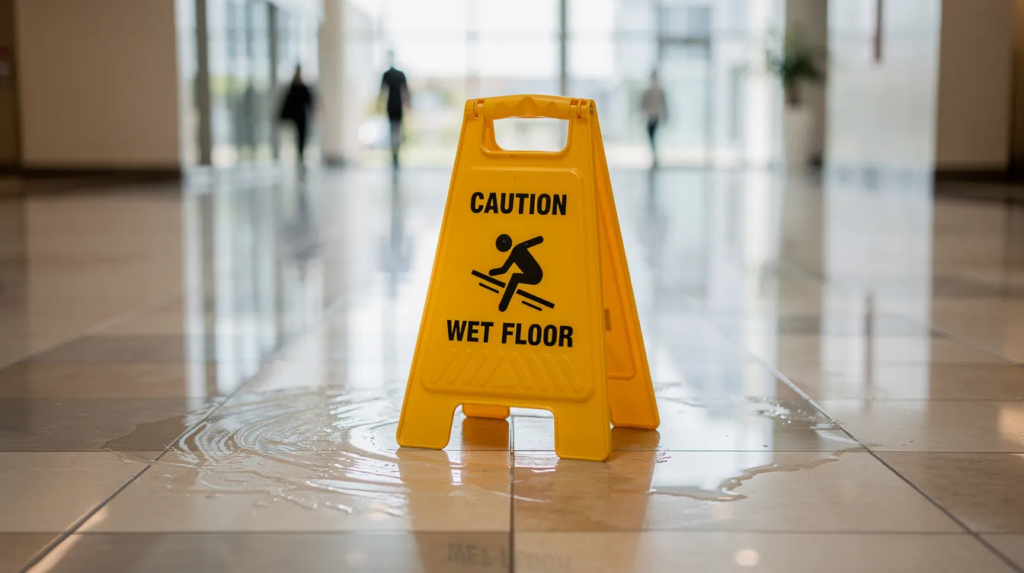
Knowing what to do after a slip and fall accident can be the difference between a strong claim and a denied one. If you slipped and fell in a Las Vegas store, casino, hotel, or apartment complex, here’s the short version: get medical care first, report the fall and request a written incident report, photograph the hazard before it’s cleaned up, get witness names, don’t give the insurance company a recorded statement, and call a slip and fall lawyer before you sign anything.
This guide is a practical, step-by-step checklist built for Las Vegas fall incidents, where spilled drinks dry fast, surveillance footage gets erased, and witnesses fly home the next morning.
Steps to Take Right After a Slip and Fall
These are the practical steps for what to do after a slip and fall accident in Las Vegas, in the order that protects both your health and your claim.
- Get to safety and get medical help. Move away from the hazard if you’re able to, and get checked out by paramedics on scene, at an urgent care clinic, or in the ER. Your health comes first, and prompt care creates the first medical record tied to your fall.
- Report the fall and get a written incident report. Tell the manager, front desk, or casino security right away. Ask for a copy of the official accident report before you leave, or at least the report number if a copy isn’t available on site.
- Photograph the exact hazard before it’s cleaned up. Spilled drinks, a wet floor with no wet floor sign, a torn carpet edge, uneven pavement: get close-up and wide shots right away, because these hazards get mopped up or repaired within minutes.
- Get contact information from any witnesses. Employees and other customers often see the fall or the cleanup that follows it. Names and phone numbers matter far more than a promise to remember later.
- Keep the shoes and clothing you were wearing. Don’t wash or repair them. They can show tread wear or the substance you slipped on, and they may become useful evidence.
- Don’t give a recorded statement to the insurance company. Adjusters call fast, and an offhand comment like “I’m fine” or “I wasn’t looking” can be used to minimize your claim later.
- Call a Las Vegas slip and fall lawyer. A quick consultation tells you where you stand before you say or sign anything else.
Why Reporting and Documentation Matter So Much
Vegas slip and fall cases are often won or lost on early documentation. Properties clean hazards quickly, and surveillance systems vary widely in how long they keep recordings — some overwrite within days, others hold footage for weeks. There is no single retention period you can count on, which is why a written preservation request sent early matters more than assuming the video will still be there later.
An official accident report timestamps that the fall occurred on that property. It notes basic facts: where it happened, which staff were present, and what the obvious hazard was. Even if the property owner won’t hand you a copy, a photo of the report on a staff screen or clipboard preserves useful details. That report can later be compared against testimony from management or employees.
Photos and videos taken right after the slip-and-fall incident capture conditions before wet floors dry, warning cones appear, or debris is cleared. This evidence can undercut a property owner’s claim that the hazard “just happened” moments before the fall. Documentation is crucial after a slip-and-fall accident to establish liability.
Surveillance footage, sweep logs, and maintenance records are almost always controlled by the property owner. Getting legal help early is the most reliable way to request that this evidence be preserved before it vanishes.


See a Doctor Even If You Feel Fine
Many fall injuries do not fully show symptoms for hours or days. Head injuries, neck and back problems, and soft-tissue damage often have delayed onset. Prompt medical care in Las Vegas (ER, urgent care, or your primary doctor) both protects your health and creates medical documentation linking the slip and fall injury to the date, time, and place of the accident. Without that same-day record, insurance companies will argue the injury came from something else entirely.
Common fall injuries include:
- Sprains and torn ligaments
- Fractures (wrist, ankle, hip) and broken bones
- Herniated discs from improper landing during a fall
- Torn rotator cuffs
- Concussions and traumatic brain injuries from striking the ground during a fall
Even injuries that start as “minor” can become serious without proper diagnosis and follow-up. Follow your doctor’s instructions, attend every follow-up visit, and save all medical records, prescriptions, and treatment bills. Insurance companies often argue that gaps in medical treatment mean the fall did not really cause the pain.
Nevada Premises Liability: What You’ll Need to Prove
Most slip and fall cases in Las Vegas are premises liability claims based on negligence. Nevada law (NRS 41.130) allows an injured person to recover damages when a property owner’s negligence causes harm. But property owners are not automatically liable for every accident that happens on their premises. Slip and fall claims require proof of negligence by the property owner.
Here is what you must show, proven by a preponderance of the evidence:
- Duty of care. You must prove the property owner owed a duty of care. Casinos, hotels, stores, and landlords must maintain reasonably safe conditions for visitors, guests, customers, and tenants. That duty includes inspecting for slip-and-fall hazards, fixing them, or warning about them.
- Breach of duty. You need to show the owner breached that duty by allowing hazards to persist. Failing to clean up a spill within a reasonable time, ignoring uneven flooring, failing to repair broken stairs or railings, or leaving areas in poor lighting can all constitute breaches if a reasonably careful property owner would have acted.
- Causation. You must demonstrate that the breach caused your injuries. The hazardous condition must have actually caused the fall; a wet floor across the room from where you fell does not establish causation.
- Damages. The injured person must have real damages: medical bills, lost income, emotional distress, and pain and suffering.
- Notice. Evidence must show the property owner had actual or constructive notice of the hazardous condition. You must prove property owners knew or should have known about the dangerous condition to establish liability. Constructive notice means a hazard existed long enough that routine inspection should have caught it. Surveillance footage, staff testimony, and maintenance or sweep logs are common sources for establishing this. Property owners can be liable for hazards they knew about or should have known about.
- Comparative negligence. Nevada follows a modified comparative negligence rule (NRS 41.141). You can only recover damages if you are found 50% or less at fault for the accident. If you are 30% at fault, for example, your recovery is reduced by 30%. At 51% or more fault, recovery is barred entirely.
Most complex premises liability cases settle before trial, but strong evidence on duty, breach, causation, and damages is what persuades insurance companies to offer fair amounts.

Common Causes and Locations of Slip and Fall Accidents in Las Vegas
Las Vegas properties, from Strip mega-resorts to neighborhood grocery stores, share recurring patterns in how fall incidents happen. Understanding these patterns helps clarify why the property owner knew (or should have known) about the risk.
Common slip and fall hazards include:
- Spilled drinks on polished casino floors
- Wet lobby tiles without a proper wet floor sign
- Worn carpets and loose carpet edges in hotel hallways
- Broken steps in apartment stairwells
- Cracked sidewalks near parking lots
- Cluttered store aisles and stacked merchandise
- Dimly lit stairwells and parking garages
These hazards appear across typical locations: casinos and hotels on Las Vegas Boulevard, resort pool decks, restaurants and bars, big-box retailers, pharmacies, and Clark County apartment complexes. The property owner’s duty of care applies across all of these property types.
When a property owner knows or should know these conditions are likely (drink spills near casino bars, tracked-in water at store entrances) and does not have reasonable inspection and clean-up routines, premises liability may arise. Foreseeability is a factor courts weigh when deciding whether someone else’s property was negligently maintained.
How Long Do You Have to File in Nevada?
NRS 11.190 generally gives injured people two years from the date of the slip and fall accident to file a personal injury lawsuit in Nevada. Courts enforce that deadline, and a complaint filed after it expires can be dismissed regardless of how strong the underlying evidence is.
Waiting too long is risky even within those two years. Witnesses disappear, surveillance video is lost, and medical records become harder to tie clearly to the fall incident. The earlier you act, the better.
If the fall happened on government property — a city or county facility, a public park, a school district building, or a state agency’s premises — different rules apply. Claims against public entities in Nevada follow a separate process from claims against private property owners, with their own filing requirements and limits on recovery. Individual agencies also maintain their own claim forms and procedures. Do not assume the standard two-year timeline is the only deadline that matters; confirm the requirements for the specific entity as early as possible.
A lawsuit filing deadline is different from an insurance claim timeline. An experienced fall attorney can track all relevant dates and make sure the fall lawsuit is filed on time if settlement talks fail.
Potential Compensation After a Slip and Fall Injury
Every fall accident claim is different, but Nevada law allows recovery of both economic and non-economic damages when someone else’s negligence caused the injuries. Nevada places no cap on economic damages in ordinary personal injury cases against private defendants.
Economic damages typically include:
- Emergency room and hospital bills
- Follow-up doctor visits and physical therapy
- Prescription medications and mobility aids
- Lost wages and lost income for time away from work
- Reduced earning capacity if the injury is long-term
Lost wages can compound with medical expenses after a fall, especially when the injured person cannot return to work for weeks or months. Medical costs for serious fall injuries can exceed $100,000 when surgery, rehabilitation, and ongoing care are involved.
Non-economic damages cover:
- Pain and suffering
- Emotional distress
- Loss of enjoyment of life
- Impact on daily activities (difficulty walking, inability to travel, reduced independence)
The value of a fall lawsuit is influenced by injury severity (minor injuries versus fractures, spinal cord injuries, or traumatic brain injuries), length of recovery, strength of liability proof against the property owner, and any comparative negligence issues. Severity also affects how long a settlement takes to resolve. Temple Injury Law does not promise specific dollar amounts but can evaluate medical records, work history, and long-term effects to pursue full and fair compensation.
Mistakes to Avoid After a Slip and Fall
Some common missteps can weaken a premises liability claim, even when the property owner was clearly negligent.
Actions to avoid:
- Leaving the scene without reporting the fall
- Failing to seek medical care the same day
- Throwing away or washing clothing and shoes from the day of the fall
- Not taking photos or videos of the hazard
Verbal and written mistakes:
- Apologizing or saying “I should have watched where I was going”
- Signing incident forms that assign blame to you
- Giving recorded statements to insurance adjusters without counsel
Social media risks: Posting photos, videos, or comments that make injuries look minor or show activities inconsistent with your claimed limitations, can be used by insurers to attack your credibility. Even a casual vacation photo can become evidence in personal injury cases.
If you are unsure about any decision, call a slip and fall lawyer before acting so you do not unintentionally harm your fall accident claim. Injured accident victims who get early guidance tend to preserve stronger cases than those who wait.
Frequently Asked Questions
Many injured people in Las Vegas have similar questions about reporting, timing, and what happens if they made mistakes after the fall.
Nevada law does not explicitly require you to file a report, but failing to notify the property owner or manager right away makes it easier for them to deny the slip and fall incident ever happened. Tell casino security, the hotel front desk, the store manager, or your landlord. Ask that an incident report be completed and request a copy of it.
Delayed reporting or treatment does not automatically kill a premises liability claim, but it does give insurers grounds to argue that the injuries stemmed from something else. Document when pain started, see a doctor as soon as possible, and have a slip and fall attorney help gather evidence to bridge the gap. Medical documentation created even a few days later, combined with witness statements or photos, can still support your personal injury claim.
Under Nevada’s modified comparative negligence rule, you can still recover compensation if you are 50% or less at fault. Your damages are reduced by your percentage of responsibility. For example, if your total damages are $100,000 and a jury finds you 20% at fault, you would recover $80,000. If the injured person is 51% or more at fault, the injured person recovers nothing. An experienced Las Vegas slip and fall attorney can evaluate how comparative negligence applies to your fall case.
Lack of video does not end a case, although surveillance footage is very helpful. Photos, incident reports, witness statements, and maintenance records can all support a premises liability claim when video is missing or overwritten. Personal injury lawyers routinely build fall injury cases around non-video evidence.
Temple Injury Law handles Vegas slip and fall and fall cases on a contingency fee basis. There are no upfront costs, and the firm only gets paid if it recovers money for you. Contact us for a free consultation to review your fall incident and learn whether you have a viable claim.

Jeff Temple
Personal Injury Lawyer
Injured in a Las Vegas Slip and Fall? Talk to Temple Injury Law
If you have suffered fall injuries in a Las Vegas casino, hotel, store, or rental property, Temple Injury Law can help investigate what happened and pursue a premises liability claim against the responsible property owner. We work with slip and fall victims across Clark County and handle everything from evidence preservation to settlement negotiations.
Contact us for a free consultation. Early involvement helps preserve surveillance footage, incident reports, and other evidence that can make or break a potential fall lawsuit. We can answer your case-specific questions, explain Nevada deadlines, and outline next steps so you can focus on healing while our law firm handles the legal process.
