
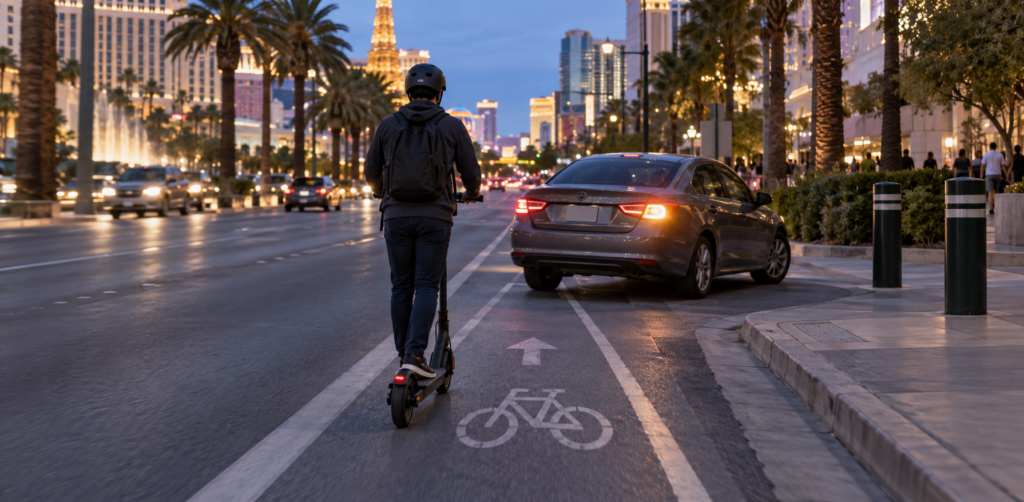
Scooters and mopeds make it easy to get around Las Vegas, but riders are vulnerable when a driver pulls in front of them, changes lanes without checking, or drives too close.
If you were hurt while riding a scooter or moped, the insurance company might downplay your accident or try to blame you. A Las Vegas scooter and moped accident lawyer can investigate how the crash happened, gather evidence of the driver’s fault, show how your injuries have affected you, and work to recover compensation for all damages. With someone handling the legal and insurance matters, you can focus more on getting better.
At Temple Injury Law, we guide you throughout the legal process and pursue compensation when the facts support a claim. Call for a free consultation with an electric scooter accident attorney in Las Vegas.
How a Las Vegas Scooter & Moped Accident Lawyer Can Help
A strong scooter accident case starts with proof. Our legal team can secure witness statements, request nearby business or traffic-camera footage, inspect the scooter or moped, and preserve app data before it disappears. We also look for distracted driving, impaired driving, poor lighting, unsafe pavement, and poor maintenance.
Once the evidence identifies each potentially liable party, we document the injuries sustained, medical expenses, lost wages, and other harm. We handle communications with the insurance companies involved, challenge unsupported fault allegations, and prepare the claim for negotiation or a personal injury lawsuit when appropriate. While no attorney can guarantee an outcome, thorough preparation helps ensure your side of the story is heard.
Nevada Scooter and Moped Laws: Why Classification Matters
The single most important legal question after a crash is what you were actually riding. Nevada treats electric scooters and mopeds as different things, and the difference changes licensing, registration, helmet rules, insurance, and which traffic statutes apply.
Electric scooters. Under NRS 484B.018, a qualifying e-scooter weighs no more than 100 pounds without a rider and has a motor-powered maximum speed of no more than 20 mph. NRS 484B.785 governs where one may be operated and gives riders substantially the same rights and duties as bicyclists, subject to local ordinances.
Mopeds. A moped is a motor vehicle, not an electric scooter. NRS 486.038 defines it by power, displacement or wattage, wheel count, and a 30 mph maximum speed. Nevada requires moped registration before highway use. The Nevada DMV states operators need a driver’s license of any class but not a Class M endorsement, all moped riders must wear a helmet, and liability insurance is not required. A larger or faster machine may instead qualify as a motorcycle, which brings the rules that apply to a motorcycle crash.
Local rules add another layer. In the City of Las Vegas, a local ordinance effective October 1, 2025 requires helmets for minors and restricts e-scooter use in certain places, and Clark County has comparable rules in unincorporated areas. The exact crash location matters.
Drivers owe riders due care regardless of classification. Under NRS 484B.270, a driver passing in a single same-direction lane must leave at least three feet, and on a multilane road must move into the lane to the immediate left when it is available and reasonably safe.
For the full statutory picture — where you can ride, sidewalk rules, age limits, equipment requirements, and penalties — see our guide to Nevada’s electric scooter laws. Because classification changes everything downstream, have an attorney verify the vehicle rather than relying on its product name.
Get directions for our Las Vegas scooter and moped accident lawyers.

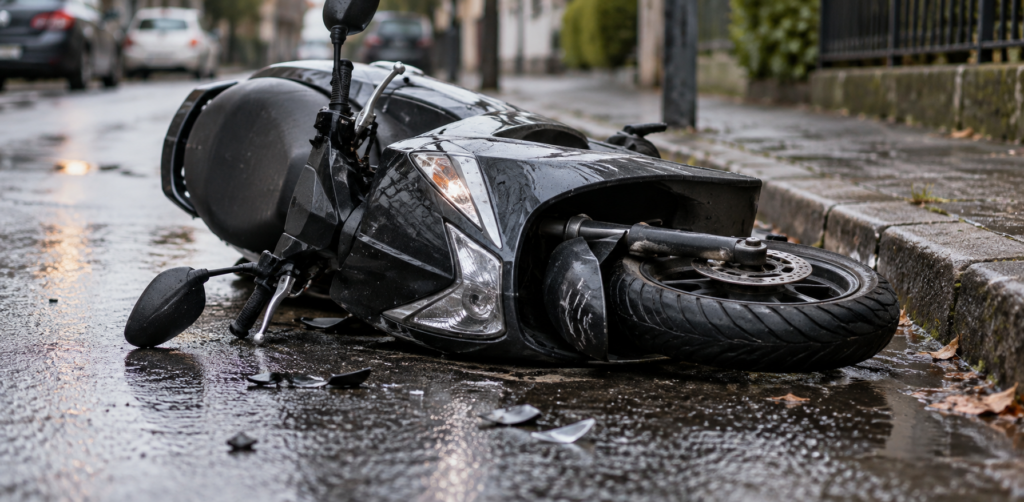
Who Is Liable for a Scooter or Moped Accident?
Liability depends on what caused the collision, not simply who was riding the smaller vehicle. A driver may be responsible for an unsafe turn, failure to yield, speeding, or opening a door into a rider’s path. A property owner or public entity may face a claim if a dangerous condition, poor lighting, or an unmarked obstruction contributed — though public-entity claims follow their own procedures and no city is automatically at fault.
Other possible responsible parties include scooter manufacturers when a defective component or inadequate warning caused the failure, and scooter rental companies when evidence shows failures in maintenance, charging, software, or inspection practices. Both the rider and another driver may share fault. A lawyer can trace the crash sequence, separate allegations from proof, and identify available scooter accident claims without assuming one party caused everything.
Rental Scooter Accidents (Lime, Bird)
A rental scooter accident in Las Vegas can involve more records than a crash on a personally owned device. The ride receipt, scooter ID, app messages, GPS history, battery data, prior repair reports, and photographs may show whether the rental scooter was available, where it traveled, and whether a reported problem existed.
Rental agreements may contain releases, dispute terms, or limits on the company’s liability. They do not determine whether another motorist, a road hazard, or a defective part caused the crash. Preserve the app account and avoid discarding scooter information. An electric scooter accident lawyer can examine the contract and evidence before deciding which parties and legal theories belong in the claim.
What If You Were Partly at Fault?
Being partly responsible does not automatically end a Nevada injury claim. Under NRS 41.141, comparative negligence does not bar recovery when the injured person’s negligence is not greater than that of the party or parties from whom recovery is sought. A claimant who is 50% at fault may still recover, with damages reduced by that percentage. Fault greater than 50% generally bars recovery.
Fault arguments often focus on speed, traffic signs, visibility, lane position, or whether the rider was distracted. We explain how comparative negligence applies to scooter crashes in more detail elsewhere. Do not accept an adjuster’s percentage without reviewing physical evidence, statements, video, and applicable traffic laws.

How Long Do You Have to File in Nevada?
You generally have two years to file a Nevada personal injury lawsuit. NRS 11.190(4)(e) sets that period for an action based on injury caused by another person’s wrongful act or neglect. Claims involving a public entity follow a separate process with their own filing requirements and limits on recovery, and individual agencies maintain their own claim forms and procedures. An insurance claim or ongoing negotiation does not protect the court deadline. Get case-specific advice promptly.
Frequently Asked Questions
Liability depends on proof of the unsafe act or condition. Video, vehicle damage, app data, road design, repair records, and witness accounts may point to one or several parties. A police report helps, but it does not always determine civil liability.
Yes. The Nevada DMV says a moped operator needs a driver’s license of any class. A motorcycle endorsement is not required for a vehicle that legally qualifies as a moped. The moped must also be registered and display its plate before you use it on the highway.
Possibly, but the rental brand alone is not enough. A claim against a rental company needs facts tying its conduct or product to the injury, such as poor maintenance, a known defect, or inadequate warnings. Review the user agreement and evidence carefully.
Most Nevada injury claims based on negligence have a two-year filing period, but the deadline can change based on the defendant, the injured person’s age, and other facts. Claims against a government entity follow a separate process. Do not rely on the general period without a review.

Jeff Temple
Personal Injury Lawyer
Injured on a Scooter or Moped in Las Vegas? Call Temple Injury Law
The first conversation should give you clarity, not pressure. Temple Injury Law will listen to what happened, flag evidence that may disappear, and explain whether our law firm can help. We handle qualifying cases on a contingency fee basis, so you owe no attorney’s fee unless we recover compensation for you. Schedule a free consultation with our e-scooter accident attorneys today.
