
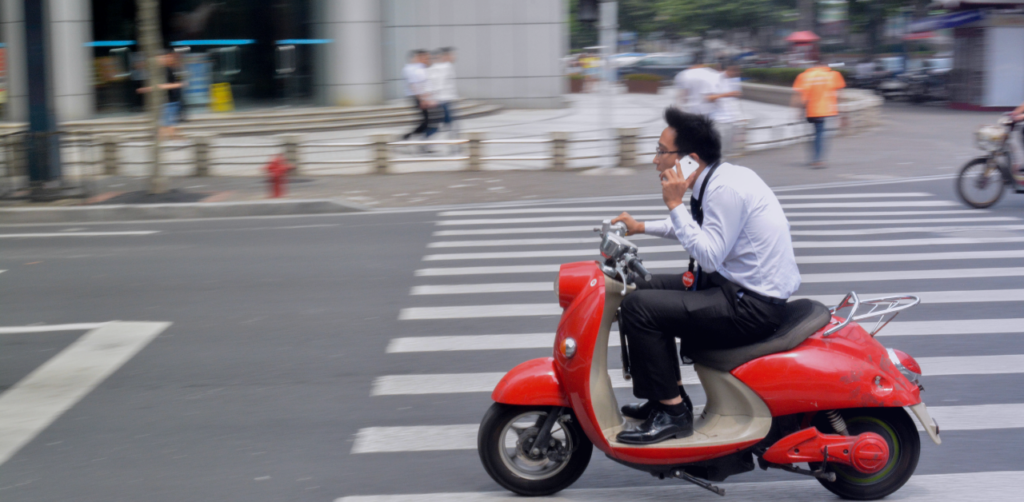
Mopeds and scooters are a convenient way to get around Nevada, especially in busy areas like Las Vegas, North Las Vegas, Reno, Carson City, Boulder City, and communities near Lake Tahoe. They are easier to park than cars, often cost less to operate, and can be practical for short trips. But they also come with serious risks.
Unlike a car or truck, a moped gives riders very little protection in a crash. A driver who is speeding, distracted, impaired, or unfamiliar with local traffic laws can cause life-changing injuries in seconds. That risk can be even higher in places with heavy traffic, tourists, nightlife, crime concerns, and fast-moving motor vehicles.
At Temple Injury Law, Attorney Jeff Temple brings 20 years of experience helping injured people understand their legal options after serious accidents. The firm has also secured successful personal injury settlements for clients who were injured due to someone else’s negligence. If you or a loved one was injured while riding a moped or scooter in Nevada, knowing where risks are higher can help you protect yourself and make informed decisions.
What Are Nevada’s Most Dangerous Areas for Mopeds and Scooters?
There is no single answer that applies to every rider. The most dangerous areas depend on whether you are looking at traffic accidents, crime data, road conditions, tourist activity, speed limits, or the number of motor vehicles on the road. That said, several areas in Nevada warrant extra caution for moped and scooter riders, based on Nevada’s 2025 fatal report.
1. Clark County and the Las Vegas Valley
Clark County is the clearest high-risk area for moped and scooter riders because it has the state’s largest concentration of traffic, tourists, nightlife, multilane arterials, and fatal crashes. In Nevada’s 2025 fatal report, Clark County recorded 237 traffic fatalities, far more than any other county. The same report shows Clark County had 59 motorcycle fatalities and 1 fatality in the “Other: Scooter, Moped, ATV” category in 2025. In 2024, Clark County had 6 fatalities in that “Other” category.
For riders, the concern is not just the number of crashes. It is the type of roadway. Las Vegas Valley travel often involves fast arterials, wide intersections, turning vehicles, distracted drivers, rideshare/taxi traffic, and exposure to impaired driving near entertainment zones. A moped or stand-up scooter can be hard to see in that environment.
2. Las Vegas Strip, Downtown Las Vegas, and Tourist Corridors
The Strip and downtown areas are especially risky because they combine dense traffic with visitors who may be unfamiliar with local roads. Riders often share space with buses, taxis, delivery vehicles, rideshare drivers, pedestrians, and drivers looking for parking or hotel entrances.
For mopeds and scooters, the danger points in these tourist-heavy areas usually include hotel driveways, large signalized intersections, mid-block conflict points, and multilane roads where drivers may not expect a slow-moving two-wheeled vehicle.
3. North Las Vegas and East Las Vegas Arterials
North Las Vegas and East Las Vegas include many wide, high-volume roads where traffic speeds and intersection conflicts can be severe. These are the types of roads where small vehicles are most vulnerable: riders have less protection, less visibility, and less room to recover if a driver turns, merges, or runs a red light.
4. Washoe County, Reno, and Sparks
Washoe County is Nevada’s second major danger zone for moped and scooter riders. In 2025, Washoe County recorded 70 traffic fatalities, up from 50 in 2024. Motorcycle fatalities remained at 13, and the “Other: Scooter, Moped, ATV” category increased from 0 in 2024 to 1 in 2025.
Reno and Sparks have many of the same risk factors as Las Vegas, though on a smaller scale: fast arterials, commuter corridors, downtown nightlife, university-area traffic, winter visibility issues, and busy intersections. Moped and scooter riders should be especially careful on high-speed roads that were designed mainly for cars, not low-profile two-wheeled vehicles.
5. University, Downtown, and Nightlife Areas
Areas around campuses, casinos, bars, event venues, and downtown entertainment districts can be dangerous because rider exposure increases at night. Visibility drops, drivers may be impaired or distracted, and scooters or mopeds may be used for short late-night trips.
NHTSA warns that motorcyclists are overrepresented in fatal traffic crashes, with 6,228 motorcyclists killed in 2024, representing 16% of all U.S. traffic fatalities. While mopeds and scooters are not identical to motorcycles, they share the same core vulnerability: the rider has very little physical protection in a crash.
6. Rural Highways and Small-County Roads
Most scooter and moped riding happens in cities, but rural Nevada should not be overlooked. Rural roads often have higher speeds, fewer shoulders, long emergency-response distances, and limited lighting. Even a single crash can be devastating.
The 2025 fatal report shows fatalities spread across many Nevada counties, including Elko, Humboldt, Churchill, White Pine, Esmeralda, and others. Several smaller counties had increases in overall fatalities, even though their raw numbers are much lower than those of Clark or Washoe.
Why These Areas Are So Dangerous
Mopeds and scooters face several recurring risks in Nevada:
- Visibility problems: Riders are smaller and can disappear in blind spots, especially near SUVs, trucks, buses, and rideshare vehicles.
- Intersection conflicts: Left turns, right turns, red-light running, and failure to yield are especially dangerous for two-wheeled riders.
- Speed mismatch: Mopeds are often slower than surrounding traffic. Nevada DMV classifies mopeds as limited-use vehicles and requires a driver’s license, registration, plates, and helmet use for operation on public streets.
- Road design: Wide arterials, long crossings, limited bike/scooter facilities, and high-speed traffic lead to severe consequences when crashes occur.
Are Crime Rates Relevant to Moped and Scooter Safety?
Yes, crime rates can matter, but they should not be confused with crash risk. Traffic risk usually involves road design, driver behavior, speed, visibility, and congestion. Crime risk usually involves issues such as theft, robbery, assault, property crime, and motor vehicle theft. Both can affect a rider’s safety, but they do so in different ways.
For example, an area with heavy traffic may be dangerous because of car accidents, even if crime is relatively low. Another area may have fewer crashes but more property crime, which could matter if many moped owners park outside overnight.
When thinking about safety, riders should consider both categories:
- Traffic risk: speeding, distracted driving, unsafe turns, poor visibility, and failure to yield
- Crime risk: theft, robbery, assault, property crime, and vehicle-related offenses
- Practical risk: riding at night, parking in isolated areas, or traveling through unfamiliar streets
What Nevada Moped Laws Should Riders Know?
Nevada law treats mopeds differently from motorcycles in some important ways. According to the Nevada DMV, a person must have a driver’s license of any class to operate a moped on public streets, but a Class M motorcycle license is not required. Helmet use, vehicle registration, and a license plate are also required. The DMV also states that moped registration is one-time only and remains valid as long as the owner keeps the vehicle.
That means many moped owners must think about more than just buying a scooter and riding it. They also need to understand registration, license plate requirements, traffic laws, and safety equipment rules.
Important Nevada moped law points include:
- A driver’s license is required to operate a moped on public streets.
- A motorcycle license is not required for a qualifying moped.
- Helmet use is required.
- Moped registration is required.
- A license plate is required.
- Riders must obey traffic laws and posted speed limits.
- Liability insurance is not required for mopeds under Nevada DMV guidance.
However, riders should be careful not to assume every scooter is legally a moped. Some scooters may be classified differently depending on their engine, speed, and design.
How Can Moped Owners Reduce Their Risk?
Moped riders cannot control what other drivers do, but they can take steps to reduce their risk.
Start with visibility. Many drivers claim they “didn’t see” a motorcycle, scooter, or moped before a crash. Riders should use lights, reflectors, bright clothing, and safe lane positioning to make themselves easier to notice.
Moped owners should also:
- Wear a helmet and other safety equipment.
- Follow speed limits and traffic laws.
- Avoid riding in blind spots.
- Use turn signals and hand signals when appropriate.
- Keep a safe distance from other vehicles.
- Avoid weaving between cars.
- Be extra careful at night.
- Watch for tourists, pedestrians, and rideshare vehicles.
- Park in visible, secure areas.
- Avoid roads where the surrounding traffic is much faster than the moped.
- Stay informed about local crash and crime data.
Riders should also inspect their moped regularly. Brakes, tires, lights, mirrors, and the license plate should all be in proper condition before riding.
Can Injured Moped Riders Recover Compensation?
An injured moped rider may be able to recover compensation if another driver, company, property owner, or other party caused the accident. Every case depends on the facts, including how the crash happened, who was at fault, what insurance coverage is available, and how serious the injuries are.
Compensation may include money for:
- Reduced earning ability
- Pain and suffering
- Property damage
- Long-term care
- Wrongful death damages if a loved one was killed
- Emergency medical care
- Hospital bills
- Surgery
- Physical therapy
- Lost wages
Insurance companies may try to blame the rider, argue that the moped was hard to see, or claim the injuries are not as serious as reported. That is why evidence matters. Police reports, medical records, witness statements, crash photos, and analysis can all help support a personal injury claim.
Talk to Temple Injury Law After a Nevada Moped or Scooter Accident
Moped and scooter riders deserve the same respect and care as everyone else on Nevada roads. When drivers fail to stay alert, follow traffic laws, or give riders enough space, the consequences can be devastating.
If you or a loved one was injured in a moped or scooter accident in Las Vegas, North Las Vegas, Reno, Carson City, Boulder City, Lake Tahoe, or another Nevada community, Temple Injury Law can help you understand your options. The firm can review what happened, explain the claims process, and help you pursue compensation for your injuries.
Contact Temple Injury Law today for a free consultation.

Jeff Temple focuses his practice in the area of personal injury. As a skilled personal injury attorney, he handles a broad range of cases including motor vehicle accidents, premises liability, and wrongful death. He is a graduate of the Radford University, he later attended the University of Miami School of Law and studied abroad at University College London. Upon graduating, Jeff relocated to Las Vegas and founded Temple Injury Law in 2022.

