
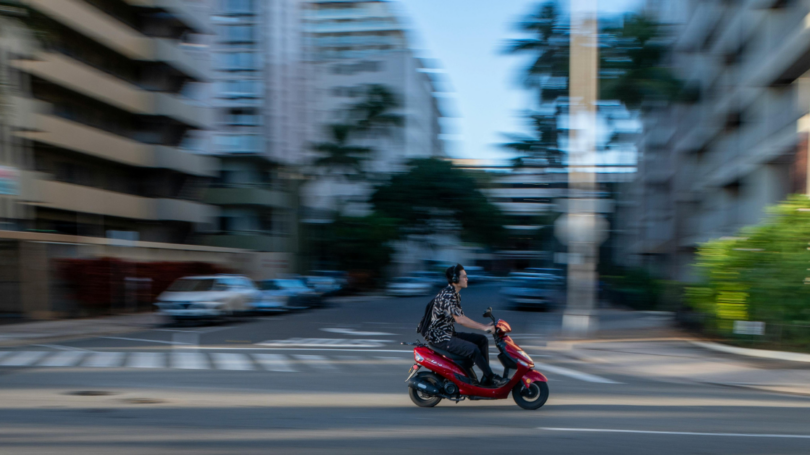
If you ride an electric scooter in Las Vegas, the short answer is this: You can ride on some sidewalks unless signs say no, but always yield to pedestrians, slow down in crowds, and follow local rules. Bike lanes can be safer on some roads, but you still need to obey traffic signs, ride predictably, and stay out of the way of cars turning across the lane.
In Clark County, e-bikes and e-scooters are generally permitted unless posted signage says otherwise, sidewalk riding is allowed unless prohibited by signs, and riders must yield to pedestrians. Clark County also requires a bell or horn, brakes, and nighttime equipment, such as a front white light and a rear red reflector or light.
At Temple Injury Law, we help injured people understand local traffic laws after serious crashes in Las Vegas. Attorney Jeff Temple, a personal injury lawyer with more than 20 years of experience representing Nevada crash victims, has seen how confusion about scooters, bike lanes, sidewalks, and roadways can lead to preventable accidents.
If a driver, rider, or property owner left you dealing with medical bills, head injuries, or other losses, talk with us about what happened and what your next step should be.
Why Do Sidewalks and Bike Lanes Create So Much Confusion for Scooter Riders?
The confusion starts with the fact that not every path is governed the same way. A sidewalk may look safer than the street, but it puts riders close to pedestrians, kids, parked cars, driveways, and people stepping out of stores. A bike lane feels more organized, yet it places scooters next to moving traffic, turning cars, and drivers who may not look for bikes and e-scooters before crossing the lane. In Las Vegas and Clark County, local regulations, posted signs, and the exact location of the ride all matter.
That is why riders often ask the wrong question. The issue is not just “sidewalk or bike lane?” The better question is which space is permitted, safer for the moment, and consistent with traffic laws where you are riding. A rider going the same direction as traffic in a marked lane faces one set of risks. A rider weaving through a crowded sidewalk faces another. Good safety decisions depend on speed, foot traffic, visibility, local signs, and the road design around you.
Why Can a Bike Lane Be Safer but Still Carry Serious Risk?
A bike lane is built to separate vulnerable road users from the main flow of traffic. In Nevada, motorists must yield to a cyclist on a bicycle path or in a bike lane, and they may not stop, park, or drive in designated bike lanes except in narrow situations, such as entering or leaving a driveway, performing official duties, following police direction, or in an emergency. Those rules provide bike lanes with a significant safety benefit compared with riding in a general traffic lane.
Still, bike lanes are not a shield. Cars cross them to turn right. Drivers open doors into them. Some motorists drift into them without checking. Many riders also assume a painted lane means they no longer need to watch every driveway, traffic sign, and turning vehicle. That is a mistake. A bike lane can reduce one type of risk while leaving another in place. Riders still need to stay alert, ride in a straight line, and avoid sudden moves that put them in front of cars.
For scooters, the safest lane use usually comes from predictable riding. That means staying visible, keeping a steady line, and riding the same direction as traffic when using the roadway system. It also means not jumping back and forth between the sidewalk, crosswalk, and bike lane without warning.
What Traffic Rules Still Apply When You Ride an Electric Scooter?
Nevada DMV guidance for bicyclists makes clear that riders on the roadway must obey traffic signs and signals, ride on the right side of the roadway, and use signals when changing direction. Motorists must also yield at intersections and give vulnerable riders space. Those same road safety habits matter for electric scooter riders sharing lanes, crossings, and roadways with cars, bicycles, and pedestrians.
That means riders should stop at lights, respect speed limits, watch for turning traffic, and avoid reckless behavior. It also means not treating a scooter like a toy. E-scooters move fast enough to cause serious injuries, especially when a rider enters traffic without enough time or space. In a crash, insurance companies often focus on rider choices first. They look at speed, lane position, sidewalk riding, and visibility before they look at the driver’s mistakes.
What Equipment Helps You Ride Smart and Stay Visible?
Clark County requires practical safety equipment for e-bikes and e-scooters.
- Riders need a bell or a horn
- Functional brakes
- Front white light, and a rear red reflector or rear light for nighttime riding
These are not cosmetic add-ons. They help riders warn pedestrians, control stopping distance, and stay visible to drivers after dark.
Helmets matter too. They are recommended for everyone and required for minors operating e-bikes or e-scooters. A properly fitted helmet can reduce the risk of head injuries in a fall or collision. Parents should take that rule seriously, especially when kids ride near streets, parks, and neighborhood paths where cars, driveways, and crowded sidewalks create sudden hazards.
Two simple habits also make a real difference:
- Check your brakes, lights, reflector, and bell before every ride.
- Slow down near pedestrians, driveways, intersections, and crowded sidewalk areas.
How Do Riders Cause Their Own Risk on Sidewalks and in Bike Lanes?
Many scooter crashes are tied to behavior, not just bad road design. Riders increase their risk when they push speed in crowded areas, ignore traffic signs, cross lanes, ride without lights, or assume cars will stop in time. On sidewalks, the most common problem is riding too fast for the number of pedestrians. In bike lanes, the common problem is failing to watch for right-turning cars, parked vehicles, and drivers entering from side streets.
Reckless behavior can also trigger fines. A first violation is $150, a second is $300, and later violations can reach $600. Parents or guardians are financially responsible for minors’ violations. Those amounts show that local enforcement is not just about safety messaging. The county considers irresponsible riding a serious public safety issue.
Riders should also remember that a legal right to be somewhere does not exempt them from caution. A permitted ride can still end in an accident if the rider fails to adjust to traffic, pedestrians, or changing street conditions.
When Does a Scooter Safety Issue Turn Into a Personal Injury Claim?
A scooter case becomes a legal claim when someone else’s conduct caused the crash, and your injuries led to losses. That can include a driver who failed to yield, a business or property owner who allowed a dangerous path condition, or another rider who acted recklessly in a crowded area. Nevada road safety materials make clear that motorists owe duties to people in bike lanes and at intersections. When drivers fail to fulfill those duties, riders can suffer serious harm.
The legal issue is often not the scooter itself. It is the fault. Who had the right of way? Were the posted rules followed? Was the rider visible? Did a driver turn across a designated bike lane? Did a sidewalk condition create a fall hazard? Those are the questions that shape liability.
A Safer Community Starts With Clear Rules and Real Accountability
Good safety habits matter, but so does accountability when another person creates the danger. Clear local rules help the community ride with more care, protect pedestrians, and reduce avoidable crashes across Las Vegas and Clark County.
At Temple Injury Law, we believe people need straight answers after an accident, not confusion and delay. That is why client trust means so much to us. As one of our clients, Manuel C., shared:
After being involved in a car accident, I turned to Temple Injury Law for guidance, and it was one of the best decisions I could have made. From the very beginning, their team was professional, responsive, and genuinely dedicated to helping me navigate a difficult and overwhelming situation
They took the time to thoroughly explain the legal process, kept me informed at every stage, and made sure I understood all my options. What stood out the most was their attention to detail and commitment to getting the best possible outcome for my case.
Thanks to their hard work and expertise, I received a fair settlement that covered my medical expenses, vehicle repairs, and more. Temple Injury Law truly advocates for their clients, and I can’t recommend them highly enough to anyone dealing with a personal injury case.If you were injured in a scooter accident in Las Vegas or Clark County, contact Temple Injury Law for a free consultation.

Jeff Temple focuses his practice in the area of personal injury. As a skilled personal injury attorney, he handles a broad range of cases including motor vehicle accidents, premises liability, and wrongful death. He is a graduate of the Radford University, he later attended the University of Miami School of Law and studied abroad at University College London. Upon graduating, Jeff relocated to Las Vegas and founded Temple Injury Law in 2022.

