
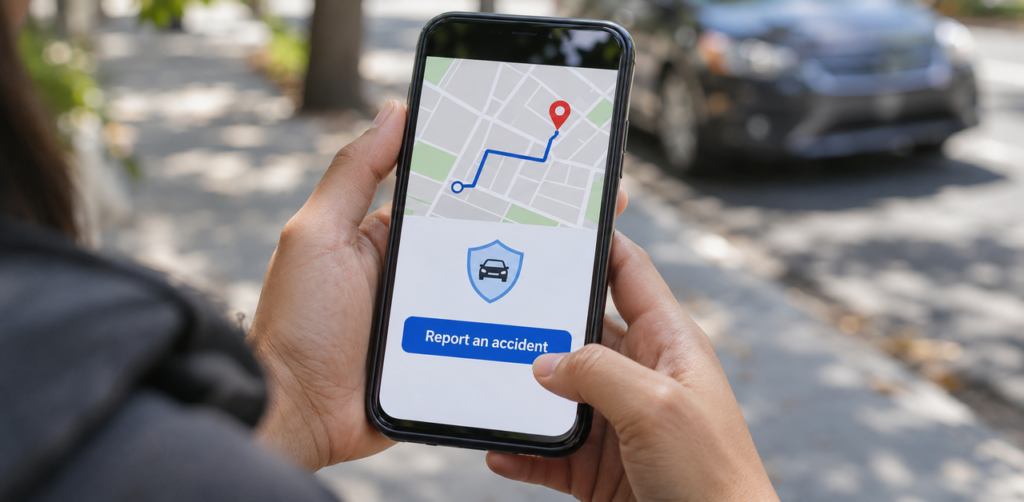
When an Uber or Lyft vehicle is involved in a crash, the hardest question may not be who caused it. It may be which insurance policy must answer for the injuries. The answer may depend on the driver’s app status seconds before the impact happened.
If you need a Blue Diamond rideshare accident lawyer, Temple Injury Law can help you find those answers. Our Blue Diamond office serves people hurt across southwest Las Vegas. Whether you are looking for an Uber accident lawyer in southwest Las Vegas or a Lyft accident lawyer near Blue Diamond Road, we examine the circumstances of the collision, the driver’s app status, and the insurance policies that may apply. We do not simply accept an insurance company’s initial explanation of fault or coverage.
Your consultation is free, and we can help you determine the next steps for your rideshare accident claim.
Rideshare Crashes in Southwest Las Vegas
Blue Diamond Road (State Route 160) connects residential neighborhoods, shopping centers, and major routes leading toward I-15 and the I-215 Beltway. Drivers from Mountain’s Edge, Southern Highlands, Enterprise, and Rhodes Ranch regularly travel through this part of Clark County. Visitors staying at southwest Las Vegas resorts or vacation rentals also rely on Uber and Lyft for transportation to the Strip, the South Point area, and Harry Reid International Airport.
With rideshare vehicles frequently entering and leaving traffic, routine pickups and drop-offs can create unexpected hazards. An Uber or Lyft driver may stop near a busy shopping center, make an abrupt U-turn, change lanes to reach a passenger, or glance at the rideshare app for directions. Distracted driving, sudden stops, unsafe lane changes, and reckless driving can quickly lead to a serious car accident.
Where the collision occurs can also influence how fault is investigated. A pickup near Rainbow Boulevard and Warm Springs Road presents different circumstances than a highway merge near I-15 or a turn from Durango Drive onto Blue Diamond Road.
This is important in crashes near Blue Diamond Road and I-215, where merging vehicles, changing traffic conditions, and driver decisions may contribute to a collision. Intersections and commercial areas near Fort Apache Road and Cactus Avenue may involve additional questions about turning movements, visibility, and right-of-way.
Many of these factors also arise in Blue Diamond car accident claims. However, when an Uber or Lyft vehicle is involved, determining liability is only part of the investigation. The driver’s status on the rideshare platform may raise additional insurance questions that don’t arise in ordinary car accident cases.
Who Pays After an Uber or Lyft Accident in Nevada?
Usually, the starting point is the driver’s status in the Uber or Lyft app at the time of the collision. Nevada treats Uber and Lyft as transportation network companies (TNCs). Under NRS 706A, they operate through permitted rideshare platforms overseen by the Nevada Transportation Authority. NRS 690B.470 sets insurance requirements for different stages of a trip.
| Driver’s app status | Insurance generally involved | What must be checked |
|---|---|---|
| App off — not available for ride requests | The driver’s personal auto policy generally applies, as in a regular car accident. | Whether the app was truly off and the personal policy covers the loss. |
| App on, waiting — available but no ride accepted | Nevada requires a lower level of rideshare liability coverage for this period. | Login records, ride requests, and any policy exclusions or endorsements. |
| Ride accepted or passenger on board — through the end of the trip | Higher TNC liability coverage is required while transportation services are being provided. | The accepted-trip timestamp, pickup/drop-off records, and relevant policy terms. |
The table does not guarantee that an insurer will pay every expense. A driver’s personal insurer may exclude rideshare use. Coverage may come from a policy the driver purchased, coverage arranged through the rideshare company, or another at-fault driver’s insurer. These details matter under Nevada rideshare insurance and accident laws, as available coverage also depends on fault, the circumstances of the collision, and who was hurt.
We seek trip details, login history, and insurance documents to determine the right coverage. Optional uninsured/underinsured motorist (UM/UIM) or medical payments coverage may also matter.

Who We Help After a Rideshare Crash
Depending on how the collision occurred, passengers, other drivers, pedestrians, cyclists, and rideshare drivers may have grounds to pursue a personal injury claim.
Our approach begins with understanding your role in the accident and identifying the parties and insurance coverage that may be responsible.
Passengers
If you were injured while riding in an Uber or Lyft vehicle, you may have a claim involving the rideshare driver, another motorist, or both. In Uber accident claims, trip receipts and ride history can provide important evidence of when the driver accepted your request and whether the trip was active when the collision occurred. These records can help identify the applicable insurance coverage, while the circumstances of the crash establish who may be at fault.
Passengers visiting Las Vegas from another state can also pursue a claim after returning home. Preserving your trip details and medical records before leaving Nevada can make the process easier.
Drivers and Passengers in Other Cars
When an Uber or Lyft driver strikes another vehicle, the injured driver and passengers may have claims against the responsible party. However, the available insurance may depend on whether the rideshare driver was waiting for a request or had already accepted a trip.
This is an important consideration in Lyft accident claims, where a driver’s app status can affect which coverage applies. If several vehicles were involved, we also investigate whether multiple drivers contributed to the collision. A rideshare accident lawyer can help determine which parties may be liable rather than assuming the driver of the rideshare vehicle bears sole responsibility.
Proving Fault in a Rideshare Accident
A personal injury claim requires evidence that someone failed to use reasonable care and that the failure caused harm. In rideshare accident cases, the dispute may be about a missed stop sign, speeding, following too closely, an unsafe pickup, or a driver checking the app instead of the road. More than one driver may share fault.
Nevada follows modified comparative negligence. You may still recover damages if your share of fault is not greater than the fault of the defendant or defendants combined. Any recovery is generally reduced by your percentage of fault. Insurance companies may dispute those percentages because they affect what each party pays.
We work to save and collect evidence that can settle those arguments: the police report from the Las Vegas Metropolitan Police Department (LVMPD) or Nevada State Police, photos, witness contacts, dashcam footage, nearby business video, and vehicle damage. We also look for the driver’s profile, accepted ride requests, trip receipts, and app timestamps. Driver history and company records may also matter.
Those records can also address a separate insurance dispute: whether the driver was between trips or already on the way to a passenger. Insurers may disagree about fault or coverage. That does not replace a full investigation.

What to Do After an Uber or Lyft Crash Near Blue Diamond
- Get to safety and call 911 when needed. Report injuries, blocked lanes, or immediate danger. LVMPD generally handles city streets; Nevada State Police may respond on highways. Request the report number.
- Get medical attention. Call emergency services for serious symptoms. Seek prompt evaluation for pain, dizziness, or head and neck symptoms. Keep records of every visit and follow the treatment plan.
- Save your trip information. Screenshot the Uber or Lyft app, rideshare driver’s name, profile photo, license plate, route, trip receipt, and any messages. Drivers should preserve their own app status and ride-request history.
- Document the scene if it is safe. Photograph vehicle positions, damage, road signs, visible injuries, and pickup or drop-off areas. Get witness names and contact details; do not stand in traffic to take pictures.
- Report the incident through the app. Give accurate basic facts. Avoid guessing about fault or agreeing to a recorded statement for an opposing insurer before getting legal advice. Do not ignore reporting duties under your own policy.
- Speak with a lawyer before a detailed insurance interview. We can request that trip data and video be preserved.
If you are visiting from another state, save your rental address, travel itinerary, and medical paperwork before leaving Nevada.
Compensation in a Rideshare Injury Claim
An injury claim should reflect how the crash changed your health, work, and day-to-day life. Depending on fault, proof, and available insurance, compensation may include:
- Medical expenses: Emergency treatment, imaging, medication, surgery, therapy, and other medical bills connected to the crash.
- Future medical care: Rehabilitation, follow-up visits, or long-term treatment supported by medical evidence.
- Lost wages and earning capacity: Missed work, reduced hours, or lasting limits on the work you can do.
- Pain and suffering: Physical pain, emotional distress, sleep problems, and limits on activities you previously enjoyed.
- Property damage and related costs: Vehicle repairs or replacement, damaged belongings, and reasonable documented expenses tied to the collision.
In cases involving fatal rideshare accidents, eligible surviving family members may also pursue compensation through a wrongful death claim for losses resulting from their loved one’s death.
How Long Do You Have to File?
In most Nevada personal injury cases, NRS 11.190 generally gives you two years to file a lawsuit. The correct filing deadline depends on the facts, and some claims have different rules. A claim involving a government entity, a minor, or an unusual injury timeline may require separate review.
Do not treat two years as a reason to wait. Rideshare app data, dashcam recordings, business surveillance footage, and witness memories can disappear much sooner. We can assess the deadline and act to request evidence while it may still be available. Filing an insurance claim is not the same as filing a personal injury lawsuit in court.
Why Choose a Blue Diamond Rideshare Accident Lawyer?
Handling a rideshare accident claim takes more than getting an insurance adjuster to return your calls. It requires examining the adjuster’s position against the trip timeline, accident scene evidence, medical records, and applicable insurance policy.
At Temple Injury Law, we draw on Marissa Temple’s experience as a defense attorney, including years working inside a major insurance company. Her background gives us insight into how insurers evaluate and challenge injury claims. We use that knowledge to question unsupported denials, identify gaps in the insurer’s reasoning, and help you understand your options.
Throughout the process, we explain which records matter, why they matter, and which decisions remain yours.
Frequently Asked Questions
Sometimes, but not simply because the crash involved an Uber or Lyft car. Drivers are often classified as independent contractors, which can limit traditional vicarious liability claims against rideshare companies. Direct company liability may depend on its own conduct and the facts, while an insurance claim may be available without suing the company itself.
You may have a claim for injuries caused by the driver’s negligence. The coverage available depends in part on whether the app was waiting for a request or the driver had already accepted your ride. We review the app records and the relevant insurance policies before identifying the best path forward.
The other driver’s liability insurer may be responsible if that driver caused the collision. If the driver lacks sufficient insurance, other applicable coverage may need review, including UM/UIM protection where available. Being an Uber passenger does not make the rideshare driver automatically responsible for someone else’s mistake.
If another driver caused the collision, you may have a bodily injury claim against that driver. Coverage through your own policy or other available benefits depends on the contracts and the circumstances. Liability coverage protecting people you injure is not necessarily coverage for your own medical bills.
You can speak with an attorney before discussing your injuries or agreeing to a settlement. The adjuster may not yet have your full treatment records or accurate app-status information. A free consultation helps you understand what documents to keep and whether the proposed next step protects your interests.

Jeff Temple
Personal Injury Lawyer
Talk to Our Blue Diamond Uber and Lyft Accident Lawyers
Maybe your ride ended before you reached home. Maybe you were on your way to work when a rideshare vehicle hit you. Either way, you deserve more than being passed from one insurer to another while the questions pile up.
If you have been searching for a rideshare accident lawyer near me, speak with Temple Injury Law at our Blue Diamond office. We serve Mountain’s Edge, Southern Highlands, Enterprise, Rhodes Ranch, Spring Valley, and the rest of southwest Las Vegas. Tell us what happened, and we will explain what we can investigate next. The consultation is free, and you pay no attorney fee unless we win.