
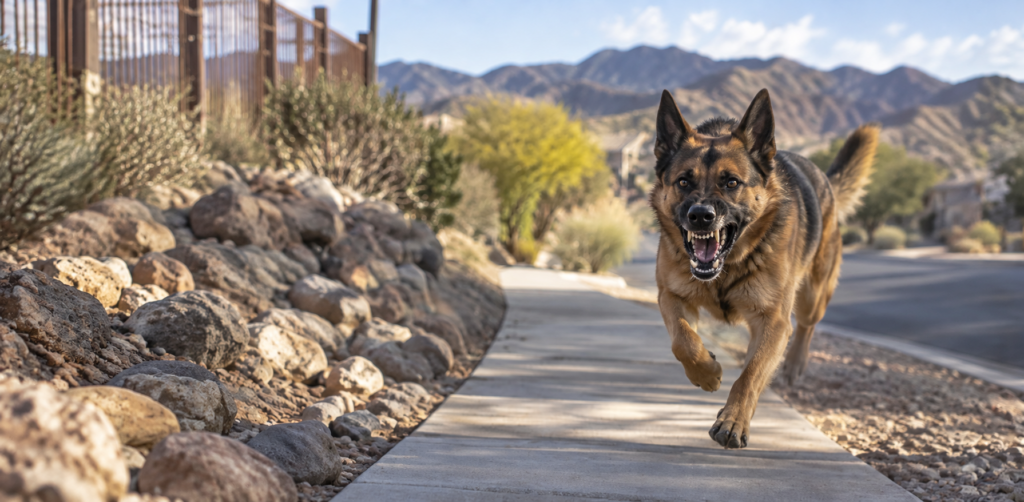
If a dog bit you or your child near Blue Diamond, you need to focus on two things: medical care and knowing your legal rights under Nevada law. Temple Injury Law is a Las Vegas dog bite lawyer that helps dog bite victims across the Blue Diamond and greater Las Vegas area recover compensation for their injuries. We handle the legal process so you can focus on healing.
Call us for a free consultation. We don’t charge a fee unless we win your case.
How a Dog Bite Lawyer Can Help
Most dog bite cases are not straightforward. Nevada’s negligence-based system means you must prove the dog owner failed to act responsibly with solid evidence. Here is what our legal team does after you call:
- Investigate the incident and gather evidence. We obtain animal control reports, veterinary records, and witness statements. Evidence of prior complaints and animal control records matters in dog bite cases; it shows whether the owner knew the dog had aggressive behavior.
- Research the dog’s history. Your lawyer should investigate the dog’s prior history for aggressive behavior. A documented bite history, neighbor complaints, or prior animal control visits can prove the owner knew the dog was a danger. Your attorney should know how to handle cases involving powerful breeds.
- Handle insurance companies. Most dog bite claims target the dog owner’s homeowner or renter insurance policy. Insurance companies may undervalue dog-bite claims. We negotiate directly with the insurer so you are not pressured into accepting less than your injuries warrant.
- Calculate your full damages. We account for all medical bills, lost wages, future medical expenses, pain and suffering, and scarring, not just the emergency room visit.
- File a dog bite lawsuit when the insurer will not pay fairly. If negotiations stall, we take the case to court. An attorney’s familiarity with local Clark County court precedents is crucial.
- Protect your deadline. You have two years to file a dog bite claim in Nevada. We make sure nothing slips.
Nevada Dog Bite Law: Negligence, Not Strict Liability
Nevada has no strict-liability dog-bite statute. Unlike states where the dog owner is automatically liable the moment a dog bites someone, Nevada applies negligence principles rather than strict liability for dog bites. That distinction matters because it changes what you have to prove.
Under Nevada’s dog bite laws, you must show the dog owner breached a duty of care — for example, that the owner failed to leash the dog, ignored signs the dog was dangerous, or violated a local ordinance. The question is not simply “did the dog bite you?” but “did the owner act reasonably to prevent the bite?”
If the pet owner violated Clark County’s leash regulations, that violation can serve as negligence per se, meaning the violation itself is treated as proof of negligence. Nevada law also allows claims for injuries from any dog, not just the owner’s: if a friend or family member was watching the dog, or the dog belongs to a tenant whose landlord knew about the danger, liability can extend beyond the registered owner.


The Nevada “One-Bite Rule” Explained
The phrase “one-bite rule” is shorthand for a notice rule. It does not give a dog one free bite. An owner may face liability if they knew or should have known the dog posed a danger and failed to take reasonable precautions.
A prior bite is strong evidence, but it is not the only proof. Earlier growling, lunging, snapping, chasing, or menacing may show that the owner knew the risk. Messages from neighbors and prior animal control records can help establish that history.
Two Nevada statutes matter here. NRS 202.500 sets out how an animal control officer may formally declare a dog dangerous or vicious, and attaches criminal penalties when a dog carrying that designation causes harm. NRS 575.020 makes it a misdemeanor to allow an animal known to have vicious or dangerous tendencies to escape or run at large in a way that endangers people. A formal declaration or a citation under either statute can be powerful evidence of the owner’s knowledge, though courts still review the specific facts before assigning civil liability.
What Compensation Can You Recover

Dog bite injuries range from minor puncture wounds to life-altering damage. The compensation you can seek depends on the severity.
- Medical expenses. Emergency room visits, surgery, infection treatment, ongoing medical care, and future medical expenses for reconstructive surgery. Research has documented nearly 27,000 people have had reconstructive surgery from dog bites in a single year. Dog bites can lead to permanent scarring and emotional trauma.
- Lost wages. If you missed work during recovery, or if severe injuries reduced your earning capacity, those losses are part of your dog bite injury claim.
- Pain and suffering. Physical pain from deep puncture wounds, scarring (especially facial injuries in children), and disfigurement carry real value. Common dog bite injuries include nerve damage, tissue loss, and infections that require extended treatment.
- Emotional distress. Dog attack survivors often experience anxiety, fear of dogs, sleep disruption, and PTSD. Psychological counseling costs are recoverable.
Across the insurance industry, the average dog bite claim payout is $69,272 according to the Insurance Information Institute. That figure reflects what insurers paid out nationally, not what any individual case is worth. Your compensation depends on the severity of your injuries, the extent of medical treatment required, the impact on your ability to work, and the emotional trauma suffered. While we do not guarantee results, our legal team fights to secure the full value of your claim by thoroughly documenting your injuries, medical treatment, and the circumstances of the attack.
What to Do After a Dog Bite
Your health comes first. The steps below also create a clear record of the animal attack without requiring you to argue about fault at the scene.
- Seek medical attention immediately. Ask the provider to document each injury, infection risk, and follow-up plan.
- Report the incident to Clark County Animal Protection Services or the agency serving the location. Request the report number.
- If it is safe to do so, get the dog owner’s name, address, phone number, insurance details, and the dog’s vaccination information.
- Take photos of the injuries, torn clothing, the scene, the open gate, the damaged fence, warning signs, and any area where the dog was off-leash.
- Collect witness names and contact information. Write down what the dog and owner did before and after the bite.
- Contact a lawyer before giving a recorded statement or signing a broad medical release for an insurance company.
For more on avoiding bites in the first place, see our guide to prevention and legal recourse.
What If You Were Partly at Fault?
Nevada follows a modified comparative negligence rule under NRS 41.141. If you were partly at fault for the dog bite, your compensation is reduced by your percentage of fault. If you are found more than 50% at fault, you recover nothing. That is the 51% bar.
Insurance companies raise these defenses regularly:
- Provocation. The insurer claims you teased, hit, or provoked the aggressive dog before the bite.
- Trespassing. If you were on private property without permission, the owner may argue reduced responsibility.
- Assumption of risk. Interacting with a dog you knew was vicious, such as ignoring posted warnings or reaching into an enclosure.
Even if you bear some fault, you can still seek compensation as long as your share is 50% or less. That is why legal representation matters when fault is contested.
How Long Do You Have to File in Nevada?
Two years. Under NRS 11.190, you must file a personal injury lawsuit for a dog bite within two years of the injury. Miss that deadline and the court will almost certainly dismiss your case. If the injured victim is a minor, the clock may be tolled (paused) until the child turns 18. But waiting still hurts your case. Early action protects your rights. Contact us as soon as possible after the bite so we can preserve evidence and build your dog bite case while the facts are fresh.

Frequently Asked Questions
Yes. Nevada follows a one-bite rule for dog liability. The dog owner can be liable if they knew or should have known their dog had dangerous tendencies. This includes prior biting, growling, lunging, or other aggressive behavior. Leash law violations can also establish negligence, even without a prior bite. Nevada is not a strict-liability state; you must prove the owner was negligent.
The dog owner is liable if they knew the dog was dangerous or failed to restrain it properly. Landlords can also be held liable if they knew about a dangerous dog on their property and failed to act. Property owners and caretakers may share responsibility. In most dog bite cases, the claim is filed against the dog owner’s homeowner or renter insurance.
Seek medical attention right after a dog bite incident. Report the bite to Animal Protection Services immediately — Clark County handles reports for the Blue Diamond area. Document the scene and injuries. Get the dog owner’s name and insurance information. Do not give recorded statements to the insurance company. Call a dog bite attorney for guidance.

Jeff Temple
Personal Injury Lawyer
Bitten by a Dog Near Blue Diamond? Call Temple Injury Law
If a dog bit you or a family member near Blue Diamond or anywhere in the Las Vegas area, we are here to help. Tell us when and where the attack happened. Let us know whether animal control responded and what medical care you received. Temple Injury Law offers a free consultation to review your dog bite case from our office at 8085 Blue Diamond Road. We serve Blue Diamond, Enterprise, and surrounding Clark County communities. Call our legal team today to take the first step toward recovery.
