
Cyclists have the same right to use Las Vegas roads as motorists, yet one careless driver can cause life-changing harm in seconds. If you were injured while riding, our Las Vegas bicycle accident lawyers can investigate the crash, identify every responsible party, and build a strong claim for your medical expenses, lost earnings, pain, and other damages.
Our legal team represents injured cyclists throughout Las Vegas and Southern Nevada. We handle the insurance companies, evidence, and legal deadlines while you focus on healing. Contact us for a free, no-obligation consultation.
Who Is Liable in a Las Vegas Bicycle Accident
The person or company whose careless actions caused the crash may be responsible. In many Las Vegas bicycle accident cases, that is a driver who failed to yield, made an unsafe turn, opened a car door into the cyclist’s path, or passed without enough room. A Las Vegas bicycle accident attorney looks beyond the damage to the bike and reconstructs the choices that led to the impact.
Possible responsible parties include:
- A driver. Phone data, video, witness statements, vehicle damage, and the official police report may show distracted driving, unsafe passing, speeding, impairment, or a failure to yield.
- A driver’s employer. If the at-fault driver was working, the facts may support a claim involving the employer as well as the driver.
- A vehicle owner or another involved party. Ownership, permission to drive, maintenance, and the conduct of other vehicles can affect who belongs in the claim.
- A public entity. A dangerous road condition, poor sight line, or defective traffic control may contribute to a bike accident, depending on the evidence.
NRS 484B.270 requires drivers to use due care around bicyclists. Breaking this law may help show that the driver was at fault. However, you still need evidence showing that the driver caused the crash and that you suffered losses. The accident scene, medical records, and accounts from all parties involved must still be evaluated.
Nevada Bicycle Laws Every Cyclist Should Know
Nevada bike accident law treats bicycles as lawful roadway users and sets duties for both cyclists and drivers. Three rules often matter most after a Vegas bicycle accident.
Safe passing. Under NRS 484B.270, a driver overtaking a bicycle must exercise due care. On a road with more than one lane moving in the same direction, the driver must move to the lane immediately left when that lane is available and the move is reasonably safe. On a one-lane road, the driver must pass to the left with at least three feet between the motor vehicle and bicycle, then remain left until safely clear. This is commonly called Nevada’s three-foot law.
Where cyclists may ride. NRS 484B.777 generally directs a cyclist to ride as near to the right side of the roadway as practicable. The law recognizes exceptions, including when the rider is traveling at the lawful speed of nearby traffic, preparing for a left turn, avoiding hazards or parked cars, or using a lane too narrow for a bicycle and other vehicle to travel side by side safely. Drivers also may not occupy bike lanes except in the limited situations listed in NRS 484B.270.
Bicycle helmets. Nevada’s statewide bicycle statutes do not require an adult cyclist to wear a helmet. The Nevada Department of Motor Vehicles still recommends a helmet, along with bright clothing and a bicycle kept in good repair.
Let our bicycle accident attorneys give you a free consultation. Our offices are located in Las Vegas at:
Central Office: 1300 S. Decatur Blvd. Las Vegas, NV 89102
Southwest Office: 8085 Blue Diamond Road, Unit 103, Las Vegas, NV 89178
Many accidents occur in the intersection of Flamingo Rd. and Las Vegas Blvd.

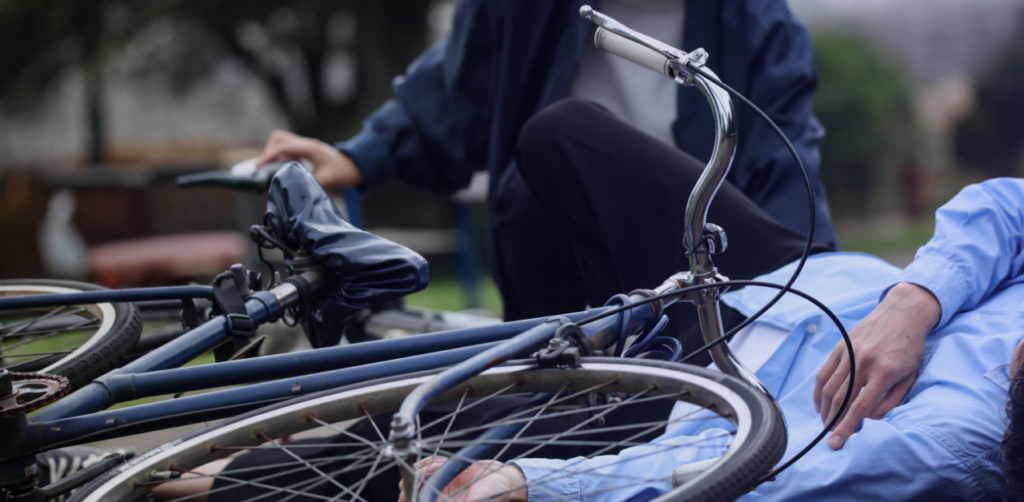
Common Causes of Bicycle Accidents
Many accidents happen because a driver looks for other cars but does not account for a smaller road user. A bicycle accident lawyer studies the movement of each vehicle rather than accepting a quick statement that the cyclist “came out of nowhere.” Common bike crashes include:
- Right-hook collisions. A driver passes a cyclist, turns right, and crosses the cyclist’s path. The impact may occur in a bike lane, crosswalk area, driveway, or intersection.
- Left-cross collisions. A driver turning left misjudges the cyclist’s speed or fails to see the bicycle approaching from the opposite direction.
- Dooring accidents. A driver or passenger in a parked car opens a car door into the path of a cyclist. The rider may strike the door or swerve into another vehicle.
- Unsafe passing. A driver crowds the bicycle, sideswipes the rider, or returns to the right before the vehicle is safely clear. Large mirrors and trailers can also enter the cyclist’s path.
- Distracted or impaired driving. A driver who is texting, using a navigation screen, fatigued, or impaired may drift into bike lanes or miss a rider at an intersection.
Crashes may also involve road debris, poor lighting, hit-and-run drivers, or a driver pulling from a driveway without yielding. Evidence gathered early helps separate the cause of the collision from assumptions made after it.
What If the Cyclist Was Partly at Fault?
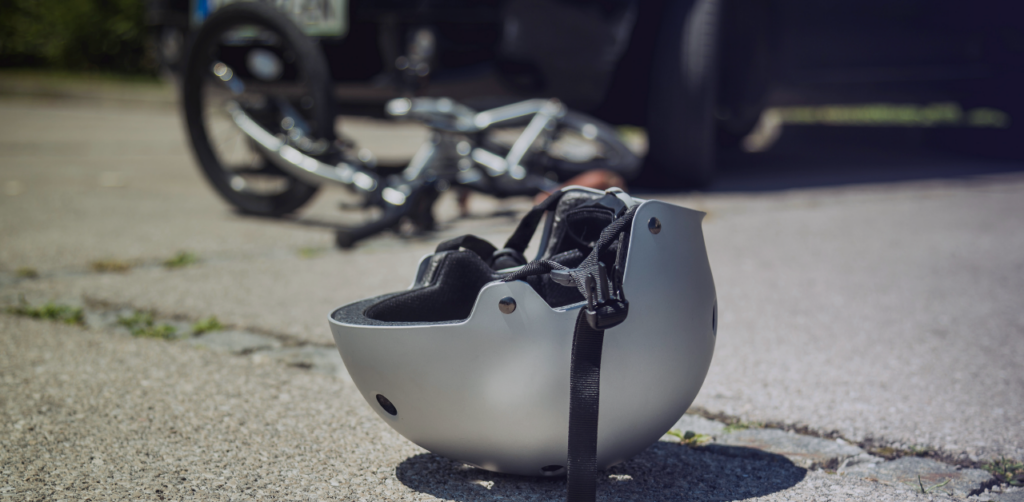
Being partly responsible does not always end a bicycle accident claim. Nevada’s comparative negligence rule, NRS 41.141, allows recovery when the injured person’s negligence is not greater than the negligence of the defendant or the combined negligence of multiple defendants. In practical terms, a cyclist who is 51% or more at fault cannot recover under this rule; a cyclist assessed 50% or less may still have a claim, with fault affecting the amount recoverable.
An insurance company may claim the rider was outside a bike lane, too far from the curb, difficult to see, or not wearing a helmet. Those points do not decide fault by themselves. NRS 484B.777 allows a cyclist to move away from the right side for left turns, hazards, parked cars, narrow lanes, and other unsafe conditions. Nevada also has no statewide adult bicycle helmet mandate, so not wearing a helmet is not automatically a traffic-law violation. The full collision evidence and the connection between any conduct and the claimed injury must be examined.
What to Do After a Bicycle Accident in Las Vegas
The first hours after a Las Vegas bicycle accident can affect both your health and the available evidence. Take these steps when you can do so safely:
- Get immediate medical attention. Call 911 for serious injuries. Even if you leave the accident scene on your own, seek medical attention promptly for pain, dizziness, confusion, numbness, or other symptoms.
- Report the collision. Ask law enforcement to respond and prepare an official police report. Give accurate facts, but do not guess about speed, distance, or injuries you cannot yet assess.
- Document the scene. Photograph the vehicles, bicycle, road, bike lanes, traffic controls, debris, skid marks, lighting, injuries, and surrounding businesses that may have cameras. Get witness names and contact details.
- Preserve the bicycle and gear. Do not repair or discard the bike, helmet, clothing, lights, or electronics. Store them safely. Their condition may help explain the forces and point of impact.
- Exchange information without arguing fault. Obtain the driver’s license, plate, insurance information, and employer details if the driver was working. In a hit-and-run, record anything you remember about the other vehicle and driver.
- Be careful with the insurance company. Report the claim as required, but do not give a recorded statement, sign a broad medical authorization, or accept a quick payment before you understand the injuries and coverage. A bike accident lawyer can handle communications with insurance adjusters.
- Contact counsel early. A legal team can request video, inspect the bicycle, locate witnesses, collect medical records, and protect filing deadlines before evidence disappears.

Las Vegas Areas We Serve
Temple Injury Law represents injured cyclists across Las Vegas, NV, and the wider Clark County community. That includes bicycle accident victims in Henderson, Summerlin, North Las Vegas, Spring Valley, Enterprise, and Blue Diamond.
The setting changes from one part of the valley to another. A Summerlin bicycle accident may involve multi-lane roads, neighborhood paths, or heavy traffic near shopping areas. A Henderson claim may arise at a high-speed arterial or a residential intersection. North Las Vegas and Spring Valley crashes may involve commuting routes, commercial driveways, parked cars, and changing bike-lane conditions. Enterprise and Blue Diamond combine rapid development with roads used by both local riders and motor vehicle operators.
Local geography matters because sight lines, lane design, construction, traffic volume, and nearby cameras can shape the investigation. Our legal team can evaluate a Las Vegas bicycle crash wherever it occurred in the valley.
How Long Do You Have to File in Nevada?
NRS 11.190 generally gives an injured person two years to file an action for personal injuries caused by another person’s wrongful act or neglect. The same subsection sets a two-year period for an action involving death. The correct start date and any exception depend on the facts, so do not treat the general rule as a reason to wait.
Evidence can disappear long before the filing deadline. Video may be overwritten, witnesses may become harder to locate, and a damaged bicycle may be repaired or discarded. Early legal action can preserve the accident scene evidence needed for a bike accident lawsuit and leave time to identify the at-fault party, insurance coverage, and medical needs.

Frequently Asked Questions
Nevada’s statewide bicycle statutes do not require an adult cyclist to wear a helmet. A helmet is still a sound safety measure, and the Nevada DMV recommends wearing one. Lack of a helmet does not automatically establish fault for the collision.
NRS 484B.270 requires a driver on a one-lane road to leave at least three feet when passing a bicycle and to stay left until safely clear. When another same-direction lane is available and moving into it is reasonably safe, the driver must move into the lane immediately left.
Fault depends on who failed to use reasonable care and whether that failure caused the bicycle accident. The driver is often responsible in unsafe-turn, failure-to-yield, distracted-driving, dooring, and unsafe-passing cases. A police report is useful, but video, witnesses, physical evidence, and traffic laws may give a fuller answer.
NRS 11.190 generally provides two years for a Nevada action seeking damages for personal injury or death caused by another person’s wrongful act or neglect. Some facts can change how a deadline is calculated. Speak with a bicycle accident attorney promptly rather than waiting for the general period to expire.

Jeff Temple
Personal Injury Lawyer
Why Choose Temple Injury Law
People searching for a bicycle accident lawyer in Las Vegas need clear advice, close attention, and a case strategy built around the evidence. Temple Injury Law is a local personal injury firm led by Jeff Temple and Marissa Temple. Jeff opened Temple Injury Law in 2022 after years of practice in Las Vegas. Marissa spent 20 years in defense litigation, including more than eight years working in-house for a major insurance company and a multi-state company. That background helps our team understand how insurers investigate injury claims and challenge medical care, fault, and damages.
We start by listening to how the crash affected your health, work, and daily life. We then investigate liability, organize medical records and bills, calculate present losses and future medical costs, identify all available insurance, and communicate with the insurance company. If fault is disputed, we compare the driver’s conduct with Nevada traffic laws and preserve evidence that shows the cyclist’s path and the vehicle’s movement.
Our representation is provided on a contingency fee. You pay no attorney fee unless we win, and the first consultation is free. Those terms provide access to an experienced attorney without an upfront attorney fee. They do not guarantee an outcome; every bicycle accident case turns on its own facts and proof.

