
Las Vegas Semi-Trailer Truck Accident Lawyers
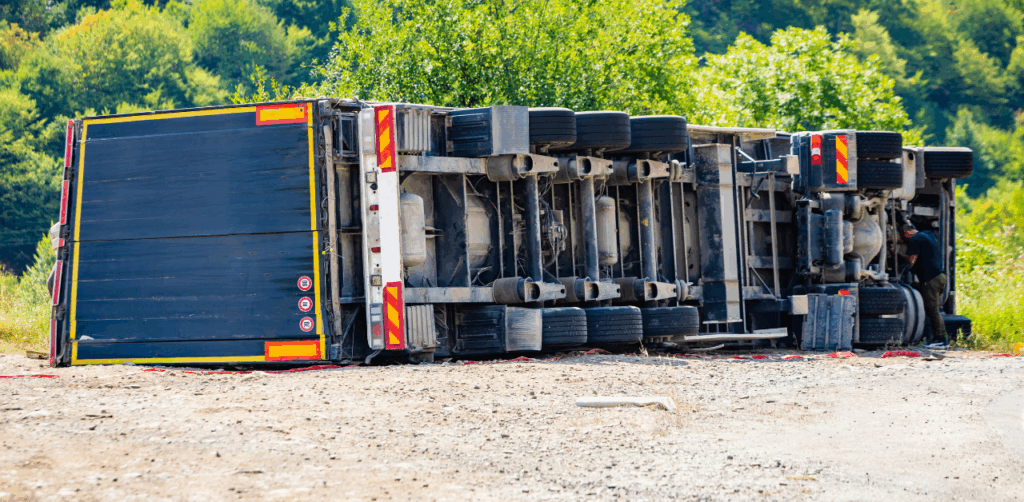
A tractor-trailer can block several lanes in seconds when cargo shifts, a tire fails, or a tired driver fails to slow for traffic. The first hours after the collision can shape which records remain available and which companies can be identified.
At Temple Injury Law, Las Vegas truck accident lawyer Jeff Temple brings more than 20 years of experience to our work for people injured in crashes involving commercial trucks and other large vehicles. We examine the driver, motor carrier, equipment, cargo, route, and insurance coverage. We then explain what the evidence supports and what steps come next.
Call (702) 487-4999 or contact us online.
Why a Las Vegas Truck Accident Claim Requires a Different Investigation
A truck accident claim is not simply a car accident involving a larger vehicle. The driver may work for a motor carrier, staffing company, contractor, or delivery network. The tractor and trailer may have different owners. A separate company may have loaded the cargo, inspected the brakes, leased the equipment, or scheduled the route.
The trucking company may hold records that a person in a passenger vehicle cannot access alone. These can include dispatch messages, electronic logging device records, driver qualification files, inspection reports, repair orders, bills of lading, weight tickets, fuel receipts, GPS history, telematics, dashcam video, and engine control module data if the truck stores it.
Insurance can also differ. Under federal rules, many covered interstate for-hire carriers hauling nonhazardous property must carry at least $750,000 in financial responsibility, and higher minimums apply to certain hazardous cargo. The available coverage still depends on the carrier, vehicle, cargo, policy terms, and every liable party. An experienced truck accident attorney should verify the policies instead of assuming a limit.
Marissa Temple spent 20 years as a defense attorney, including eight years working in-house for a major insurance company. She knows how commercial adjusters are trained to evaluate claims and how defense teams build their cases. That experience now works entirely for you.
Once you hire Temple Injury Law, we deal with the trucking company’s insurer, their attorneys, and their investigators. You focus on recovering.
Let our truck accident attorneys give you a free consultation. Our offices are located in Las Vegas at:
Central Office: 1300 S. Decatur Blvd. Las Vegas, NV 89102
Southwest Office: 8085 Blue Diamond Road, Unit 103, Las Vegas, NV 89178

Types of Truck Accidents in Nevada
The crash pattern can point to the records, defects, and responsible parties to investigate. The following types of truck accidents arise on Nevada highways, urban streets, loading areas, and delivery routes.
1. Jackknife Truck Accidents
A jackknife happens when the trailer swings toward the tractor and forms an angle. Hard braking, excess speed, slick pavement, brake imbalance, or a shifting load can start the movement. The trailer may sweep across several lanes and strike passenger vehicles that have no safe path to avoid it.
2. Rollover Truck Accidents
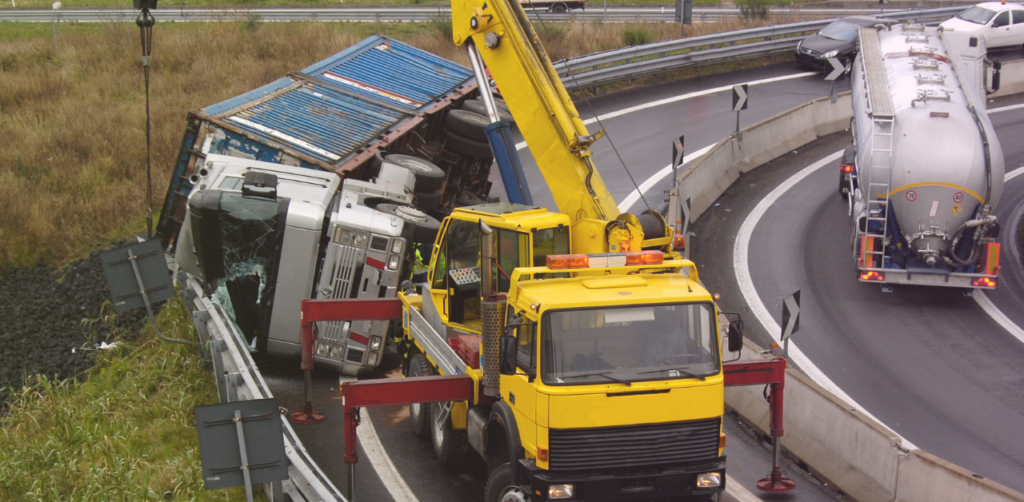
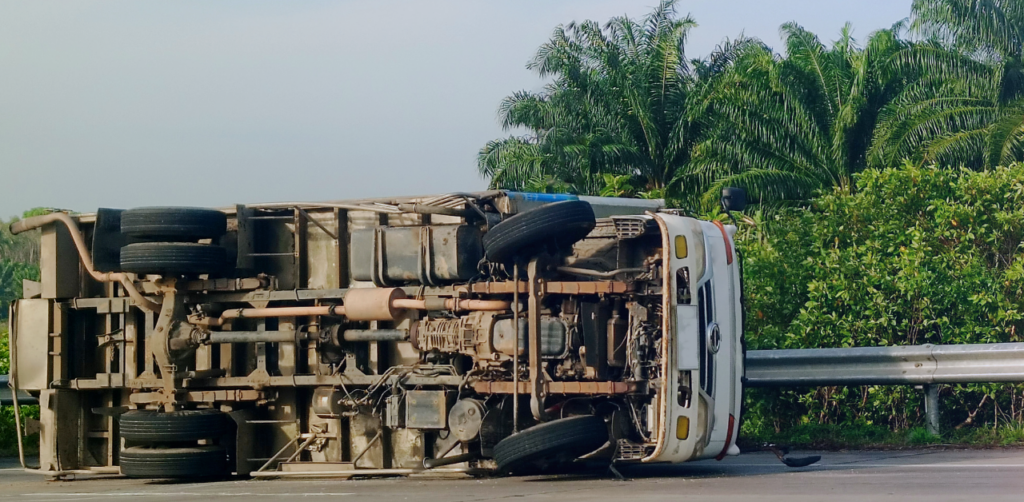
A semi truck can roll when a driver enters a curve too fast, makes a sharp steering move, or carries a load with a high or uneven center of gravity. Rollover cases often require a close review of speed, cargo weight, load placement, tire condition, and the driver’s response.
3. Underride and Override Collisions
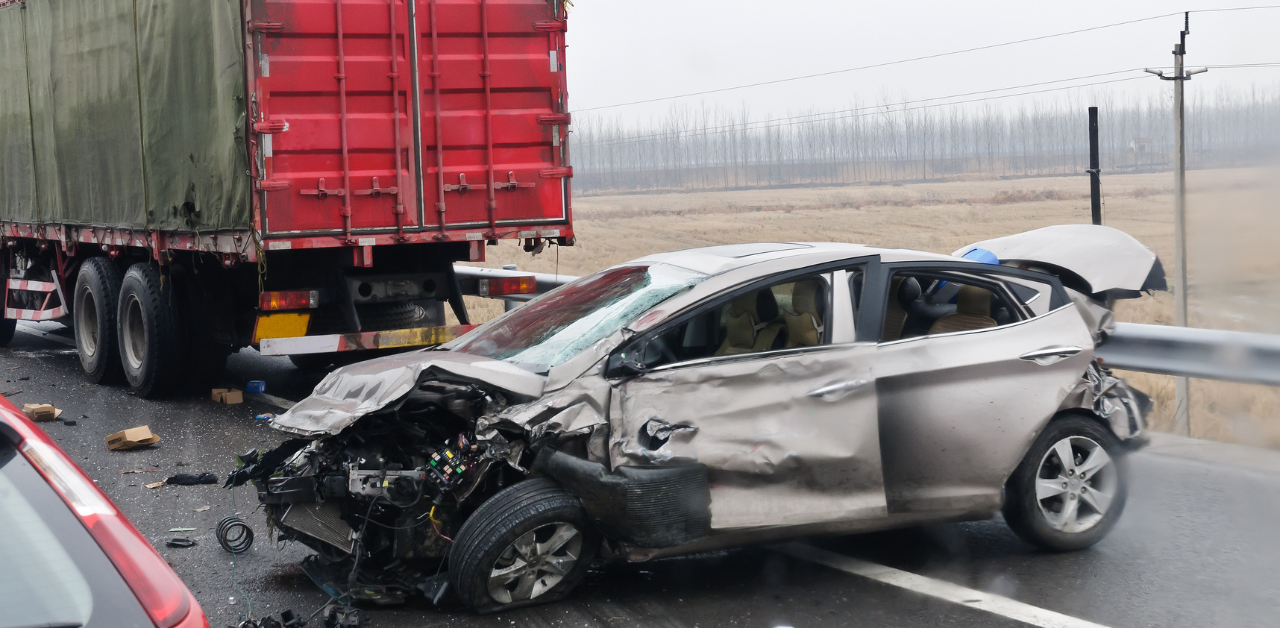
An underride crash occurs when a smaller vehicle slides under the side or rear of a trailer. An override crash occurs when a large truck rides over a smaller vehicle. These truck crashes can cause catastrophic injuries because the truck may enter the passenger compartment.
4. Rear-End Truck Collisions
Large trucks need more distance to slow down, especially when they are heavy, traveling downhill, or moving at highway speed. Driver fatigue, distracted driving, speeding, worn brakes, and following too closely can lead to a rear-end truck wreck.
5. Head-On Collisions With Commercial Trucks
Head-on collisions can happen after lane drift, an unsafe pass, a medical event, tire failure, or loss of control. The combined force can cause fatal accidents or serious injuries to people in both vehicles.
6. Blind-Spot Sideswipe Accidents
Commercial trucks have large blind spots beside and behind the cab where passenger vehicles may be hard to see. A sideswipe may occur when a truck driver changes lanes without checking mirrors, cameras, traffic, or turn signals.
Evidence That Can Show How the Truck Crash Happened
The strongest truck accident cases connect physical evidence, electronic records, witness accounts, and company files. A preservation notice should identify the specific materials tied to the accident. The duty to preserve can arise when litigation is reasonably expected, and a written notice helps define what the carrier and other businesses should keep.
- Police and scene records: The police accident report, body-camera footage, 911 calls, traffic citations, roadway measurements, accident report number, and photographs taken before the vehicles move.
- Vehicle and electronic data: Dashcam video, GPS records, telematics, collision-avoidance data, brake events, speed history, and ECM or event data if the tractor or another vehicle stores it. Not every truck records the same information.
- Driver records: ELD records, paper logs when allowed, duty status, dispatch messages, route instructions, fuel receipts, toll records, phone records, training files, medical certification, and prior safety history.
- Inspection and maintenance files: Pre-trip and post-trip reports, annual inspections, repair orders, tire records, brake measurements, roadside inspection reports, and out-of-service notices.
- Cargo records: Bills of lading, loading diagrams, seal records, weight tickets, securement inspections, shipper instructions, and contracts with the loading company.
- Independent evidence: Witness statements, nearby business video, other vehicles’ cameras, passenger photos, medical records, damaged personal property, and the injured person’s account of each impact.
A police report does not determine civil liability, but it can document the scene, the people involved, and statements made soon after the accident. The full investigation should test those statements against video, data, damage patterns, and sworn testimony.
Federal Safety Rules That May Apply to the Claim
Federal Motor Carrier Safety Regulations apply to many commercial trucks and commercial truck drivers. The exact rule depends on the vehicle, cargo, route, and operation. A local delivery truck may not be subject to every rule that applies to an interstate semi-truck.
Hours of Service and Driver Fatigue
Under 49 CFR Part 395, a property-carrying driver may generally drive up to 11 hours after 10 consecutive hours off duty and may not drive beyond the 14th consecutive hour after coming on duty. Break, weekly limit, sleeper-berth, adverse-condition, and short-haul rules may also apply. ELD data, dispatch pressure, fuel stops, and delivery times can show a violation or disprove one.

Drug and Alcohol Testing
Federal rules require testing in defined situations for covered commercial drivers. The analysis may include pre-employment records, random testing, post-accident testing, reasonable-suspicion testing, return-to-duty records, and the timing of any sample. A missing test does not prove impairment, but the reason for the missing record may matter.
Inspection, Repair, and Vehicle Maintenance
49 CFR Part 396 requires covered motor carriers to inspect, repair, and maintain vehicles under their control. Brake defects, worn tires, steering problems, lighting failures, and coupling defects can support a negligence claim when the records and physical evidence show that the condition existed before the crash.
Cargo Securement
49 CFR Part 393, Subpart I contains cargo securement rules for covered loads. The investigation may focus on tiedowns, blocking, bracing, load distribution, inspections, and the people who loaded or accepted the trailer.
Phone Use and Other Distractions
Commercial driver rules restrict texting and hand-held mobile phone use. Distracted driving can also involve dispatch screens, navigation devices, food, paperwork, or activity inside the cab. Phone records should be matched to the crash time instead of treated as proof by themselves.
Parties That May Be Liable for a Commercial Truck Crash
The liable parties depend on who caused the unsafe condition and who controlled the work. A serious truck accident may support claims against more than one person or business.
- Truck driver: Speeding, unsafe lane changes, distracted driving, driver fatigue, impairment, following too closely, or failure to inspect the vehicle.
- Motor carrier or trucking company: Negligent hiring, training, supervision, dispatch, retention, maintenance, or pressure to violate safety rules. The company may also be responsible for a driver’s work-related negligence.
- Tractor or trailer owner: Unsafe equipment, missed repairs, lease duties, or control over maintenance.
- Cargo shipper or loading contractor: Improper loading, inaccurate weight information, weak securement, or a hidden cargo condition.
- Maintenance provider: Faulty brake work, missed tire damage, incomplete inspections, or a repair that failed.
- Parts manufacturer or seller: A defective tire, brake component, steering part, coupling device, or safety system.
- Other drivers: Another vehicle may start or add to a chain-reaction crash.
- Public entity or road contractor: A dangerous work zone, missing traffic control, or a road defect may support a claim under separate public-entity rules.
Contracts can help identify each party’s role, but a contract label is not the final answer. Ownership records, federal operating authority, leases, dispatch control, payment records, and actual conduct can carry more weight.
Nevada Deadlines and Fault Rules That Can Change the Result
Nevada’s General Two-Year Filing Period
Nevada generally requires that a personal injury or wrongful death lawsuit be filed within 2 years under NRS 11.190. The exact start date and any exceptions depend on the facts. The practical evidence deadline is often earlier because vehicles are repaired, recordings are overwritten, and routine retention periods expire.
Nevada’s Modified Comparative Negligence Rule
Under NRS 41.141, an injured person can generally recover damages when their fault is not greater than the combined fault of the parties from whom recovery is sought. The award is reduced by the injured person’s percentage of fault. Insurers may examine speed, lane position, following distance, seat-belt use, and evasive action, so the response should rely on evidence rather than an early accusation.
Punitive Damages Require Added Proof
NRS 42.005 allows punitive damages in certain cases when clear and convincing evidence shows fraud, oppression, or malice, subject to statutory rules and limits. A federal safety violation may be part of the proof, but it does not automatically result in a punitive damages award.

Damages Available After a Truck Accident
A truck accident injury claim should connect each requested amount to records, testimony, and the injuries sustained. The available categories may include the following.
- Medical expenses: Ambulance care, emergency treatment, surgery, hospital care, medication, rehabilitation, therapy, assistive devices, and future treatment supported by medical evidence.
- Lost wages and reduced earning capacity: Time missed from work, lost benefits, reduced hours, job changes, or a long-term loss of earning capacity.
- Property and out-of-pocket losses: Vehicle damage, towing, storage, rental costs, travel for care, home help, and needed changes to a home or vehicle.
- Pain and life effects: Physical pain, emotional distress, sleep loss, loss of enjoyment, scarring, disability, and limits on family or daily activities.
- Wrongful death damages: Claims by eligible heirs and the estate may include funeral expenses, loss of support, loss of companionship, and other losses allowed by Nevada law.
- Punitive damages: A separate category that may be available only when the statutory standard is met.
Commercial insurance can provide more coverage than a personal auto policy, but policy limits do not set the value of every case. Coverage disputes, exclusions, multiple claims, liens, fault, and the strength of the medical evidence can affect the available financial compensation.
Injuries Often Seen in Semi Truck Accidents
The size difference between commercial trucks and passenger vehicles can produce serious injuries even when the truck driver walks away. Injury victims may need care for traumatic brain injuries, spinal cord damage, fractures, internal bleeding, organ injuries, crush injuries, burns, amputations, nerve damage, scarring, post-traumatic stress, and chronic pain.
Some injuries are not obvious at the accident scene. Seek medical attention after a hard impact, especially after a head strike, loss of consciousness, chest or abdominal pain, weakness, numbness, confusion, or worsening symptoms. Prompt care protects health and creates a clear medical record of the injury from the truck accident.
Common Causes of Truck Accidents in Las Vegas
Driver fatigue is the cause we see most in cases involving long-haul operators on the I-15 corridor. Drivers push through mandated rest periods to meet delivery windows. Fatigue impairs reaction time and judgment at roughly the same rate as intoxication, and the HOS records often tell the story clearly.
Distracted driving, especially phone use, causes a disproportionate number of large-truck crashes because the stopping distances involved are much greater. A truck driver glancing at a phone for four seconds at 65 miles per hour travels the length of a football field without watching the road.
Improperly loaded cargo causes rollovers and jackknife accidents, particularly on highway on-ramps and in emergency braking situations. When the load shifts, the driver loses control.
Mechanical failures, including brake failures and tire blowouts, are more common with poorly maintained commercial fleets. Trucking companies that defer maintenance to cut costs create serious risks on Nevada highways.
Blind spot violations are a persistent cause of side-impact crashes in Las Vegas traffic. A standard 18-wheeler has four significant blind spots, and passenger vehicles that linger in them are invisible to the driver.
Case Results in Serious Accident Cases
$1,300,000 — Pedestrian struck in crosswalk. Our client suffered a traumatic brain injury when a driver struck them in a marked crosswalk. The insurance company denied liability. We found a witness, built the case, and recovered $1.3 million.
$450,000 — Hit-and-run on Desert Inn Road. Our client was struck by a driver who fled the scene. We located the at-fault driver through Tesla dashcam footage and recovered full compensation through the client’s uninsured motorist coverage. The insurer said there was nothing to collect. There was.
$400,000 — Rear-end collision. Our client was rear-ended while the at-fault driver was on the clock. We pursued claims against both the driver and the employer’s insurer and settled for an amount that reflected the full impact on our client’s life.
$255,000 — Fault-free passenger. A passenger with no fault in a multi-vehicle crash. We identified and recovered from multiple insurance policies, including the client’s own underinsured motorist coverage.
Prior results do not guarantee what your case will recover. Every case is different.
Frequently Asked Questions About Truck Accident Cases In Las Vegas
Call 911. Get medical attention even if you feel okay. Photograph the scene, the truck, the license plate, and the DOT number on the side of the cab if you can. That number identifies the carrier. Do not discuss fault at the scene and do not give a statement to the trucking company’s insurer. Then call us. The evidence preservation process needs to start that day, not after you have had time to think about it.
Because the black box data and driver logs have retention periods. Once they are gone, they are gone. We send a Letter of Spoliation immediately after you retain us, which legally requires the trucking company to preserve all electronic data, logs, and maintenance records. If you wait weeks to call, that window may already be closed.
Your own health insurance covers treatment while the case is ongoing. If you have MedPay or PIP coverage on your auto policy, that may also be available. The settlement or verdict recovers your medical costs, including future treatment. We help you navigate all of it.
Yes. Large trucking carriers keep accident response teams on retainer precisely for this situation. Their goal is to gather evidence and statements before you have legal representation. Do not speak with them. That is exactly what we are here for.
Often yes. Trucking companies frequently try to classify drivers as independent contractors to avoid liability, but courts look at the actual working relationship. If the company controlled how the driver operated, set the route, and required compliance with company policies, that driver may be considered an employee for liability purposes. We investigate the full employment relationship.
Your claim is filed in Nevada and governed by Nevada law, regardless of where the driver or trucking company is based. Federal FMCSA regulations apply to all commercial carriers operating in the United States. Out-of-state trucking companies are not outside Nevada’s jurisdiction.
No. The evidence preservation window does not wait for your recovery. You should also know your full injury picture before settling anything, which is a separate issue. We can begin the investigation while you are still treating and make sure no deadlines are missed.
Nothing upfront. We work on contingency, which means our fee comes from your recovery. If we do not win, you owe us nothing.

Jeff Temple
Truck Accident Lawyer
Talk To A Las Vegas Truck Accident Lawyer With Temple Injury Law
If you or a family member were injured in a truck accident in Las Vegas, Henderson, or anywhere in Clark County, the time to act is now. Jeff Temple and Marissa Temple represent truck accident victims across the Las Vegas Valley. Whether you need a truck accident attorney or help with any other personal injury claim, the consultation is free and there is no fee unless we win.
Call (702) 487-4999 or contact us online.

