
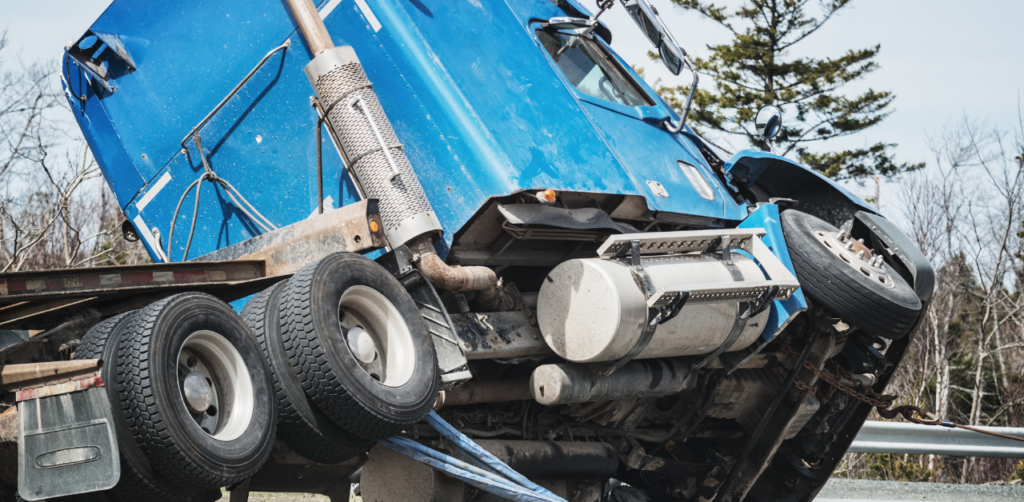
Truck accidents in Nevada often involve more force, more damage, and more legal issues than a standard car accident. The most common types of truck accidents in Nevada include jackknife crashes, rollover accidents, rear-end collisions, underride crashes, wide-turn collisions, tire blowout accidents, lost-load accidents, blind-spot collisions, head-on collisions, and multi-vehicle accidents involving large commercial trucks. These crashes can lead to severe injuries, catastrophic injuries, and fatal injuries, especially when a semi truck collides with smaller passenger vehicles. Federal trucking rules, Nevada fault laws, and commercial insurance policies can all affect what happens next.
At Temple Injury Law, we help people understand what caused a truck crash and what can be done after it. Jeff Temple brings more than 20 years of experience to injury cases in Nevada, and our team handles claims involving truck driver negligence, trucking company failures, and commercial vehicle crashes across Las Vegas.
If you have suffered serious injuries in a truck accident, contact us for a free consultation and get a clear answer about your next steps.
Jackknife Accidents That Sweep Across Lanes
A jackknife accident happens when the cab and the truck’s trailer fold toward each other. This usually starts when the truck driver brakes hard, loses traction, or drives too fast for traffic or road conditions. Once the trailer swings out, it can block multiple lanes and hit several other vehicles in seconds.
These are among the most dangerous accidents on Nevada highways because they often happen at freeway speeds. In Las Vegas, a jackknifed tractor-trailer can trap nearby drivers with little room to escape. Jackknife accidents also raise hard questions about fault. The cause may involve a negligent truck driver, worn brakes, air brake failure, slick pavement, or a trucking company that pushed unsafe schedules.
Rollover Accidents With Crushing Impact
Rollover accident claims are common in Nevada trucking accident cases involving speed, sharp turns, overloaded trucks, or improper cargo loading. A large truck has a high center of gravity, so the risk rises when cargo shifts or the driver tries to correct too sharply. When a truck rolls over, the trailer can crush nearby passenger vehicles and shut down traffic across multiple lanes. Temple Injury Law already identifies rollovers as one of the common truck crash patterns handled in its truck accident content.
Truck accident victims in rollover cases often suffer broken bones, head trauma, spinal injuries, traumatic brain injuries, and other serious injuries. These crashes can also involve truck owners, a cargo loader, or maintenance contractors if the commercial truck was unstable before the crash began.
Rear-End Collisions Caused by Heavy Stopping Distance
Rear-end collisions involving a semi truck are rarely minor. A fully loaded commercial truck needs much more distance to stop than a smaller vehicle. If a truck driver is speeding, distracted driving is involved, or brake failure develops, the impact can be violent.
In Nevada, truck accidents and rear-end crashes often happen in freeway congestion, near work zones, and in stop-and-go traffic around Las Vegas. A rear impact with a tractor-trailer can push a smaller vehicle into other vehicles, creating a multi-vehicle accident.
Underride Crashes That Put Smaller Vehicles at Extreme Risk
An underride crash happens when a passenger vehicle slides under the rear or side of a large commercial truck. These collisions often cause serious or fatal injuries because the upper part of the smaller vehicle can go beneath the trailer. Head trauma, neck injuries, and fatal injuries are common in these cases.
Underride crashes can happen when a truck stops suddenly, has poor lighting, or blocks the road at night or during low visibility. They also appear during lane changes and wide turns. In truck accident cases involving underride impact, the investigation may focus on trailer guards, reflective markings, visibility, and the truck driver’s actions before the crash.
Wide-Turn Collisions Near Intersections and Driveways
A semi truck needs extra space to turn, but that does not excuse unsafe movement. Wide-turn collisions happen when a truck swings left before turning right, cuts too sharply, or traps a car, bike, or pedestrian beside the trailer. These truck collisions are common in city traffic and tight commercial areas.
Accidents in Las Vegas often involve delivery routes, utility trucks, tow trucks, and other commercial drivers moving through packed intersections. A truck driver fails to check mirrors, rushes a turn, or misjudges the space beside the trailer, and the result can be a crushing side-impact crash. Many truck accident victims do not realize how often these claims depend on camera footage, scene marks, and witness statements gathered early.

Tire Blowout Accidents From Heat, Wear, and Defective Tires
Tire blowouts are a serious problem in Nevada because long stretches of highway and desert heat put extra stress on commercial vehicle tires. When a tire blows out, the truck can lose control, roll over, or send debris into nearby traffic. Tire blowout accidents may involve defective tires, poor maintenance, overloaded trucks, or missed inspections.
Law firms treat tire blowout truck crashes as a stand-alone subject on their truck accident site, which shows how often these claims raise separate liability issues. In these cases, fault may fall on the truck driver, the trucking company, a maintenance provider, or a tire manufacturer. For truck accident claims, that means the case may turn on inspection logs, repair records, and the condition of the failed tire after the crash.
Lost Load Accidents From Improper Cargo Loading
Lost load accidents occur when cargo spills, shifts, or falls into traffic. Improper cargo loading can make a truck unstable, increase the risk of rollover, or scatter materials across the roadway. That can trigger truck crashes involving several cars in seconds.
This type of commercial truck accident is common with flatbeds, construction trucks, and trailers carrying heavy or unbalanced freight. The truck driver may not be the only one at fault. A cargo loader, warehouse contractor, or trucking company may have failed to properly secure the load. Lost-load accidents also matter because they can injure drivers who never come into contact with the truck itself. A driver swerves to avoid falling cargo, crashes into a barrier, and still has a valid claim.
Multi-Vehicle Pileups That Start With One Truck Error
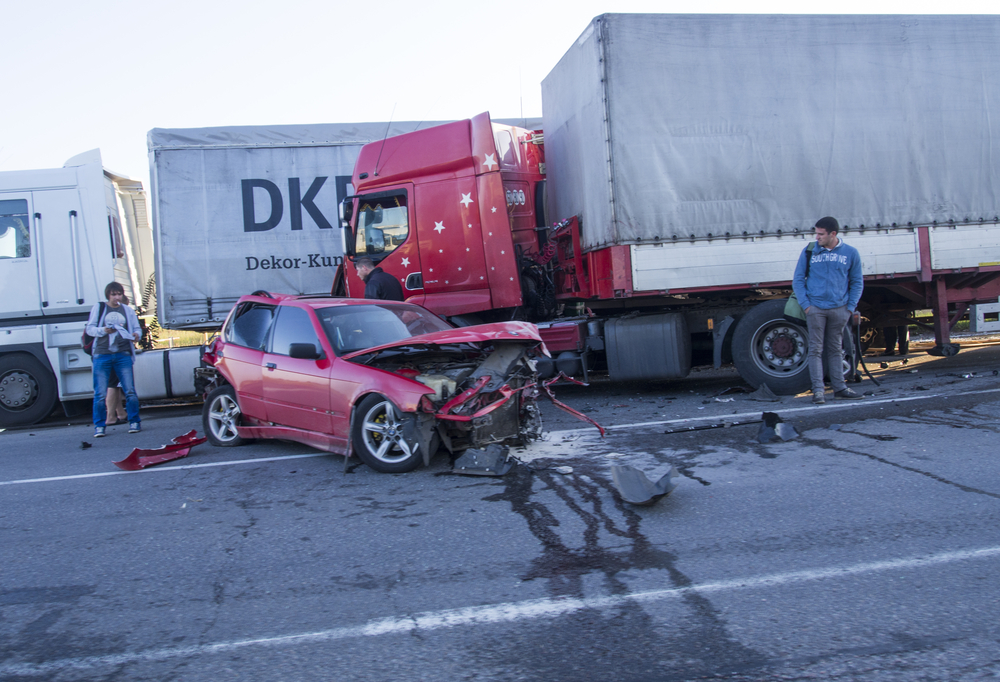
Many truck accidents do not end with a single impact. One unsafe lane change, one missed stop, or one blown tire can set off a chain reaction involving many vehicles. Multi-vehicle accidents are especially common on Nevada freeways, where high speeds leave little time to react.
These pileups are hard to sort out because several drivers, several insurance companies, and several impact points may be involved. In Nevada truck accident cases, a full investigation often needs black box data, police reports, medical records, and a close review of how the crash began.
Why the Type of Truck Accident Matters in a Nevada Claim
The type of truck accident matters in a Nevada claim because it changes how the case is investigated, who may be at fault, and what evidence can prove liability. It also affects who may be legally responsible.
In some truck accident cases, the truck driver caused the collision through distracted driving, driver fatigue, or unsafe lane changes. In others, the trucking company may share fault for poor hiring practices, inadequate training, missed maintenance, or pressure to meet delivery deadlines. Some commercial truck accident claims also involve truck owners, repair companies, or manufacturers if brake failure, air brake failure, or defective parts played a role.
In short, the type of truck accident explains how and why the crash occurred, and what must be proven to build a strong Nevada truck accident claim.
What Truck Accident Victims Should Do Right After a Crash
Ensure Immediate Safety and Call 911
The most urgent priority is preventing further injury. If the vehicles are functional and in a dangerous position, move them to the shoulder or a safe area away from active traffic. Turn on your hazard lights and, if available, set up flares or reflective triangles to warn oncoming motorists.
Once safe, call 911. Reporting the accident is often a legal requirement for commercial vehicle crashes. Police officers will create an official accident report, which serves as foundational evidence for insurance claims. When the police arrive, provide a factual account of what happened, but avoid speculating on speed or distances if you are unsure.

Seek Medical Evaluation Immediately
Even if you believe your injuries are minor, you must be examined by a medical professional as soon as possible. The adrenaline following a crash can mask symptoms of serious internal injuries, concussions, or soft-tissue damage that may not manifest for 24 to 48 hours.
Establishing a medical baseline immediately after the crash creates a paper trail that links your injuries directly to the accident. If you delay treatment, insurance companies may argue that your injuries were caused by a separate event or were not as severe as claimed.
Collect Evidence and Information at the Scene
If you are physically able, use your phone to document the scene thoroughly. Because trucking companies often send their own investigators to the site within hours, capturing “perishable” evidence is critical.
- Take Photos/Videos: Capture vehicle damage, skid marks, debris fields, traffic signals, and road conditions.
- Identify the Truck: Note the trucking company’s name, the USDOT number on the side of the cab, and the license plate numbers for both the truck and the trailer.
- Gather Contact Info: Get the driver’s name and insurance details, as well as contact information for any witnesses who stopped to help.
Be Mindful of Your Communication
In the hours following the crash, you may be contacted by insurance adjusters representing the trucking company. They may appear helpful, but their primary goal is to minimize the company’s liability.
- Do Not Admit Fault: Avoid saying “I’m sorry” or “I didn’t see you,” as these statements can be used against you as an admission of liability.
- Avoid Recorded Statements: You are generally not required to provide a recorded statement to the other party’s insurance company immediately.
- Stay Off Social Media: Refrain from posting photos or details about the accident online, as investigators often monitor social media to find evidence that contradicts your injury claims.
Consult a Specialized Truck Accident Attorney
Trucking accidents are governed by complex federal and state regulations, such as the Federal Motor Carrier Safety Regulations (FMCSR). A specialized attorney can act quickly to send a spoliation letter, legally requiring the trucking company to preserve critical evidence, such as “black box” data (Electronic Control Module), driver logbooks, and maintenance records.

Jeff Temple
Personal Injury Lawyer
Speak With Temple Injury Law About Your Nevada Truck Accident Claim
Truck crashes do not all happen the same way, and that matters. A jackknife, tire blowout, underride crash, or lost load accident each points to different facts, different mistakes, and different sources of liability. For injured people, understanding the types of truck accidents in Nevada is not just about traffic safety. It is about knowing why the crash happened and how to protect a claim before records disappear and insurance companies shape the story.
At Temple Injury Law, we help truck accident victims make sense of the facts, the injuries, and the legal path ahead. If you were hurt in a truck accident in Las Vegas or anywhere in Nevada, contact us for a free consultation.
