
Many riders assume scooters are safer than motorcycles because scooters are often smaller, slower, and easier to ride. In some situations, that assumption is true. A scooter traveling at lower speeds on local streets may expose a rider to less crash force than a high-powered motorcycle or sport bike on a highway. But the full answer is more complicated.
Scooters and motorcycles are both two-wheeled vehicles, which means riders do not have the same level of protection as people in a car. There are no seat belts, airbags, or enclosed frames to absorb the impact of a crash. Whether you are riding a motorcycle, scooter, moped, maxi scooter, or electric scooter, your safety depends on speed, road conditions, riding skills, visibility, safety gear, traffic laws, and other drivers’ behavior.
At Temple Injury Law, Attorney Jeff Temple has been an advocate for injured riders and accident victims for more than 20 years, helping them secure successful personal injury settlements. For scooter riders and motorcycle riders, understanding the risks can help prevent accidents and protect your rights after a crash.
Are Scooters Safer Than Motorcycles?
Scooters can be safer than motorcycles in some lower-speed situations, but they are not always safer overall. Scooters are generally slower, easier to handle, and often used for short city trips. Those factors can reduce the risk of high-speed motorcycle crashes.
However, motorcycles are generally considered more stable and dynamically capable than scooters. Motorcycles usually have larger wheels, stronger suspension, better braking capacity, and more power. These features can give a rider more control, especially at higher speeds or in fast-moving traffic.
The biggest safety difference often comes down to how and where the vehicle is used. A scooter may be safer in a parking lot, a neighborhood, or on a low-speed city street. A motorcycle may be safer than a scooter on roads where traffic moves faster, where larger wheels and greater stability matter more.
What Is the Difference Between a Scooter and a Motorcycle?
A scooter and a motorcycle may both ride on two wheels, but they are built differently.
A scooter usually has a step-through frame, smaller wheels, an upright seat, and an automatic transmission. Many scooter riders choose them because they are easy to park, simple to operate, and fun for short trips. Slower scooters and electric scooters may have capped top speeds, sometimes around 15 to 30 mph depending on the model and local rules.
A motorcycle is usually larger, heavier, and more powerful. The rider typically straddles the engine, which can lower the center of gravity and help with balance. Many motorcycles also use larger wheels that help stabilize the bike at speed. Some motorcycles, especially a sport bike, can accelerate quickly and reach much higher speeds than scooters.
A motorcycle may require more advanced riding skills, especially if it has a manual transmission. Motorcycles also usually require a specific motorcycle endorsement or driver’s license requirements, depending on state law and vehicle type.
Why Scooters May Be Safer in Some Situations
Scooters may be safer in some situations because they:
- Usually travel at slower speeds
- Are often easier for new riders to control
- May have an automatic transmission instead of a manual transmission
- Are commonly used for shorter city trips
- Are easier to maneuver in low-speed areas
- May reduce the risk of high-speed fatal impacts
- Can be more practical for parking lot use, campus travel, and dense city traffic
Lower speeds matter because speed affects both stopping distance and crash force. A rider traveling at 20 mph usually has more time to react than a rider traveling at highway speed. That can help scooter riders avoid accidents when car drivers turn, stop suddenly, or fail to pay attention. However, slower does not mean safe in every situation. A scooter rider can still suffer severe injuries if struck by a car, truck, or other vehicle.
Why Motorcycles May Be Safer in Other Situations
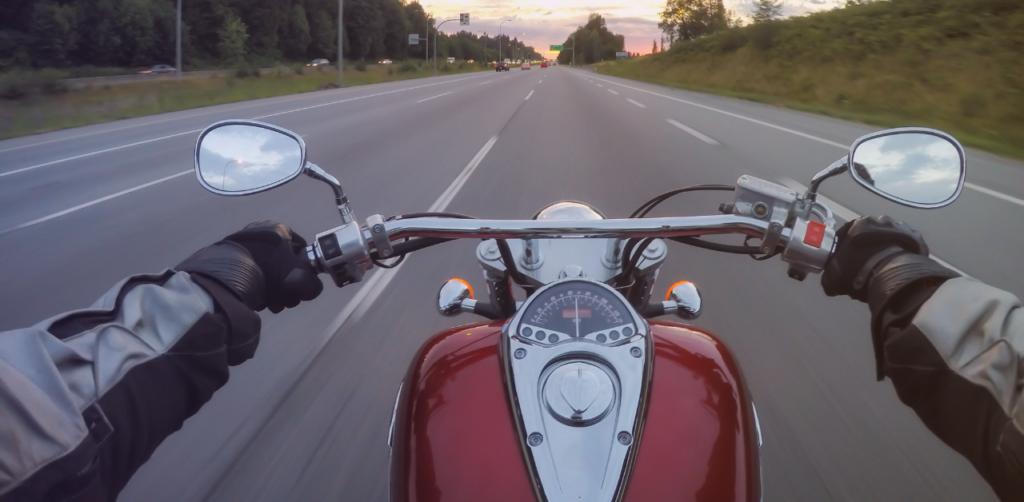
Motorcycles may be more dangerous at high speeds, but they also have safety advantages that scooters often do not.
Motorcycles usually have larger wheels, which help stabilize the bike at speed. Larger wheels can handle potholes, debris, uneven pavement, and rough road conditions better than smaller wheels. Motorcycles also tend to have more powerful engines, stronger brakes, and better suspension systems.
A motorcycle can sometimes accelerate out of a dangerous situation, while a slower scooter may not have enough power to avoid an aggressive driver, a lane change accident, or a merging vehicle. This does not mean speed should be used recklessly. It means motorcycles may give experienced riders more control in certain traffic conditions.
Motorcycle riders may also be more likely to wear DOT-approved helmets, gloves, jackets, boots, and other protective gear. By comparison, many scooter riders treat scooters as casual transportation and may ride without the same level of safety gear.
That can be dangerous. NHTSA reports that motorcycle riders remain overrepresented in fatal traffic crashes, with 6,228 motorcyclists killed in 2024, representing 16% of all U.S. traffic fatalities. NHTSA also urges riders to use DOT-compliant helmets, make themselves visible, and ride sober.
Are Scooter Crashes Less Dangerous Than Motorcycle Crashes?
Scooter crashes may be less severe at lower speeds, but they can still cause serious injuries.
Scooter crashes often involve:
- Head and neck injuries
- Broken wrists or arms
- Leg injuries
- Facial injuries
- Road rash
- Shoulder injuries
- Back injuries
- Traumatic brain injuries
- Internal injuries
One major issue is wheel size. Motorized scooters often use much smaller wheels than motorcycles. Smaller wheels and tires can make scooters more vulnerable to potholes, gravel, uneven pavement, wet roads, and sudden loss of traction. A bump that a motorcycle can handle may cause a scooter rider to lose control.
Scooters are also smaller, which can make them harder for car drivers to see. Distracted drivers may overlook scooters in traffic, at intersections, or during lane changes. Aggressive drivers may also sideswipe scooter riders while overtaking them.
So while scooters may travel at lower speeds, scooter riders are still exposed to serious crash risks.
Are Motorcycles More Dangerous Than Scooters?
Motorcycles can be more dangerous than scooters because they often travel at higher speeds and operate in faster traffic. A motorcycle crash at highway speed can cause catastrophic injuries or death.
Motorcycle accidents are especially dangerous when they involve:
- Speeding
- Lane splitting
- Sudden lane changes
- Left-turn accidents
- Rear-end accidents
- Distracted drivers
- Drunk or impaired drivers
- Trucks or larger vehicles
- Poor road conditions
- Lack of helmet use
- Inexperienced riders
Motorcycles also have powerful engines, which can tempt some riders to accelerate too quickly or take risks. A sport bike, for example, can reach dangerous speeds in a short distance. That increases the chance of losing control or being unable to stop in time.
Still, motorcycle safety depends heavily on rider behavior. A trained rider wearing proper safety gear, obeying traffic laws, and practicing defensive riding may be safer than an untrained scooter rider wearing no helmet in heavy traffic.
What Causes Most Scooter and Motorcycle Accidents?
Many scooter and motorcycle accidents happen because other motorists fail to pay attention. Riders are smaller than cars and trucks, which makes them easier to overlook.
Common causes of scooter and motorcycle accidents include:
- Drivers making unsafe lane changes
- Drivers turning left in front of riders
- Rear-end accidents
- Speeding
- Distracted driving
- Aggressive driving
- Failure to yield
- Following too closely
- Opening car doors into a rider’s path
- Unsafe passing
- Poor visibility
- Bad weather
- Dangerous road conditions
- Rider inexperience
Most accidents are not caused by one factor alone. A crash may involve driver error, poor road design, bad weather, limited visibility, and a rider’s split-second reaction. The same patterns that explain common causes of motorcycle accidents apply just as much to scooter riders sharing the same roads.
For example, a scooter rider may be traveling at lower speeds, but if a car driver turns without looking, the scooter rider may have nowhere to go. A motorcycle rider may be wearing a helmet and riding defensively, but a truck driver who fails to check a blind spot can still cause a devastating crash.
Why Visibility Matters for Scooter and Motorcycle Riders
Visibility is one of the most important safety factors for anyone riding on two wheels. Scooters and motorcycles are smaller than cars, trucks, and SUVs. This smaller size makes them harder for drivers to see, especially in heavy traffic, at intersections, or during lane changes.
Riders can improve visibility by:
- Wearing bright clothing
- Wearing reflective clothing
- Using headlights during the day
- Avoiding blind spots
- Using turn signals
- Keeping a safe following distance
- Making eye contact with drivers when possible
- Avoiding sudden movements in traffic
- Staying out of the path of larger vehicles
Visibility does not eliminate risk, but it helps other drivers notice the rider sooner. That extra second of awareness can make a significant difference.
Does Safety Gear Matter More Than the Vehicle?
Safety gear matters for both scooter riders and motorcycle riders. Whether a rider is on a scooter, motorcycle, moped, or electric scooter, protective gear can reduce the severity of injuries.
Important safety gear includes:
- Helmet
- Gloves
- Eye protection
- Jacket
- Long pants
- Riding boots
- Reflective clothing
- Other protective gear
A helmet is especially important because head injuries are among the most serious injuries in two-wheeled vehicle crashes. NHTSA recommends DOT-compliant motorcycle helmets and emphasizes that riders should make themselves visible and ride sober.
Protective gear cannot prevent every injury, but it can help protect the rider’s head, hands, legs, skin, and joints during a crash.
Nevada and Clark County Scooter and Motorcycle Safety Rules
In Nevada, motorcycle riders and passengers generally must wear protective headgear when operating a motorcycle or moped on a highway. Nevada law also addresses the use of protective glasses, goggles, or face shields in certain situations.
Clark County also has rules for e-bikes and e-scooters. Clark County states that helmets are recommended for everyone using e-bikes or e-scooters, and minors are required to wear helmets. The county also states that e-bikes and e-scooters are limited to 15 mph in County parks unless a higher limit is posted.
These rules matter because Las Vegas and Clark County have heavy traffic, tourist drivers, rideshare vehicles, pedestrians, and busy intersections. Scooter riders and motorcycle riders should obey traffic laws, stay visible, and ride defensively at all times.
How Can Scooter Riders Stay Safe?
Scooter riders can reduce their risk by treating scooters like real vehicles rather than toys. To stay safe, scooter riders should:
- Wear a helmet
- Use reflective clothing
- Keep both hands on the handlebars
- Obey traffic laws
- Avoid sidewalks where prohibited
- Watch for car doors
- Avoid riding between vehicles
- Slow down near intersections
- Be careful in parking lots
- Avoid wet or uneven roads
- Check brakes, tires, and lights
- Never assume drivers can see them
- Avoid riding while distracted
- Avoid riding in foul weather
Many scooter riders get hurt because they underestimate the risks. Even at lower speeds, a crash can cause serious injuries if the rider hits pavement, a curb, a car, or another fixed object.
How Can Motorcycle Riders Stay Safe?
Motorcycle riders need strong riding skills, good judgment, and consistent safety habits. Motorcyclists can reduce risk by:
- Wearing a DOT-approved helmet
- Taking a motorcycle safety course
- Practicing defensive riding
- Wearing gloves, boots, jackets, and other protective gear
- Following traffic laws
- Avoiding excessive speed
- Staying out of blind spots
- Watching for left-turning vehicles
- Avoiding aggressive riding
- Adjusting for road conditions
- Maintaining the bike
- Using headlights and signals
- Avoiding impaired riding
- Keeping a safe distance from cars and trucks
Defensive riding is especially important. Riders should assume other drivers may not see them, may misjudge their speed, or may make sudden moves.
Are Maxi Scooters Safer Than Smaller Scooters?
Maxi scooters may offer more stability than smaller scooters because they are larger, heavier, and often built for higher speeds. They may also have larger wheels, better brakes, and more comfortable seats. However, maxi scooters can still be dangerous. They may travel fast enough to mix with heavy traffic, but they still do not provide the enclosed protection of a car. Riders still need a helmet, protective gear, strong riding skills, and defensive riding habits. A maxi scooter may be safer than a small scooter on some roads, but it is not risk-free.
Are Electric Scooters Safer Than Motorcycles?
Electric scooters are usually slower than motorcycles, which may reduce the chance of high-speed fatal crashes. However, electric scooters have unique risks.
Electric scooters often have:
- Smaller wheels
- Limited suspension
- Less stability on rough roads
- Lower visibility
- Lower rider protection
- Less formal rider training
- Higher risk of casual helmet use
Electric scooters are especially risky when riders use them in traffic, at night, near pedestrians, or on damaged pavement. A small pothole or uneven surface can cause a rider to lose control.
Electric scooters may be safer than motorcycles in terms of speed, but they can be more unstable and less protective in everyday riding conditions.
Who Is Liable After a Scooter or Motorcycle Accident?
Liability depends on who caused the crash. In many cases, a negligent driver may be responsible for a scooter or motorcycle accident.
Potentially liable parties may include:
- A distracted car driver
- A speeding driver
- A truck driver
- A rideshare driver
- A delivery driver
- A driver who failed to yield
- A driver who caused a rear-end accident
- A driver who made an unsafe lane change
- A property owner is responsible for unsafe parking lot conditions
- A government agency responsible for dangerous road conditions
- A manufacturer if a defective part contributed to the crash. The kind of claim that may fall under product liability.
Evidence is important in these cases. Photos, police reports, witness statements, traffic camera footage, helmet use, medical records, and vehicle damage can all help show what happened.
When Should You Contact a Personal Injury Lawyer?
You should consider contacting a personal injury lawyer after a scooter or motorcycle crash if you were injured, blamed for the accident, contacted by insurance adjusters, or unsure who was at fault.
Legal help may be especially important if:
- A car, truck, or other vehicle hit you
- The driver says they did not see you
- You suffered head, neck, back, or leg injuries
- The insurance company is delaying your claim
- You missed work
- You need ongoing medical care
- The crash happened in Las Vegas or Clark County
- The accident involved disputed traffic laws
- A loved one was seriously injured or killed
A lawyer can investigate the crash, gather evidence, deal with insurance companies, calculate damages, and pursue compensation for medical bills, lost income, pain and suffering, and other losses.
Are Scooters Safer Than Motorcycles?
The safest choice depends on the rider, the road, the vehicle, the speed, the weather, the safety gear, and the behavior of other drivers. Whether you ride a scooter or motorcycle, the best way to stay safe is to wear a helmet, use protective gear, follow traffic laws, stay visible, and practice defensive riding.
If you were injured in a scooter or motorcycle accident, Temple Injury Law can help you understand your options and pursue compensation from the party responsible for your injuries. Schedule a free consultation with us today.

Jeff Temple focuses his practice in the area of personal injury. As a skilled personal injury attorney, he handles a broad range of cases including motor vehicle accidents, premises liability, and wrongful death. He is a graduate of the Radford University, he later attended the University of Miami School of Law and studied abroad at University College London. Upon graduating, Jeff relocated to Las Vegas and founded Temple Injury Law in 2022.

