
Scooters and mopeds are often grouped together because they are smaller than motorcycles, easier to park than cars, and commonly used for affordable transportation. Both are popular with riders who want a practical way to handle short trips, city traffic, and everyday errands. However, they are not the same.
At Temple Injury Law, Attorney Jeff Temple brings 20 years of experience helping injured riders and accident victims understand their rights after crashes involving scooters, mopeds, motorcycles, bicycles, cars, and other motor vehicles. Our firm’s history of successful personal injury case settlements reflects its commitment to helping clients after serious accidents.
Understanding the difference between a scooter and a moped can help riders make an informed decision about what to ride, what safety gear to wear, and what local laws may apply. It can also help riders better understand licensing requirements, insurance costs, engine power, speed limits, and safety risks before getting on the road.
What Is a Moped?
A moped is generally a lightweight motorized bicycle or small motor vehicle designed for lower speeds and short city trips. Mopeds are often seen as accessible transportation because they typically have smaller engines, lower top speeds, and better gas mileage than many scooters or motorcycles.
Traditionally, mopeds had bicycle pedals, which is where the word “moped” originally came from. Today, many mopeds no longer have pedals, but the term is still commonly used to describe small, low-powered motor vehicles.
Most mopeds are best suited for:
- Short trips around town
- Lower-speed streets
- Urban environments
- Riders who want simple transportation
- People looking for better gas mileage
- Riders who prefer smaller engines and lower operating costs
Because mopeds are not designed for high speeds or long distances, they may not be ideal for highways or other roads where traffic moves quickly. Their lower engine capacity can make them efficient, but it also limits their performance.
Depending on local laws, a moped may need a license plate, registration, insurance, or a specific type of license. Local regulations can vary, so riders should check the rules in their area before operating one.
What Is a Scooter?
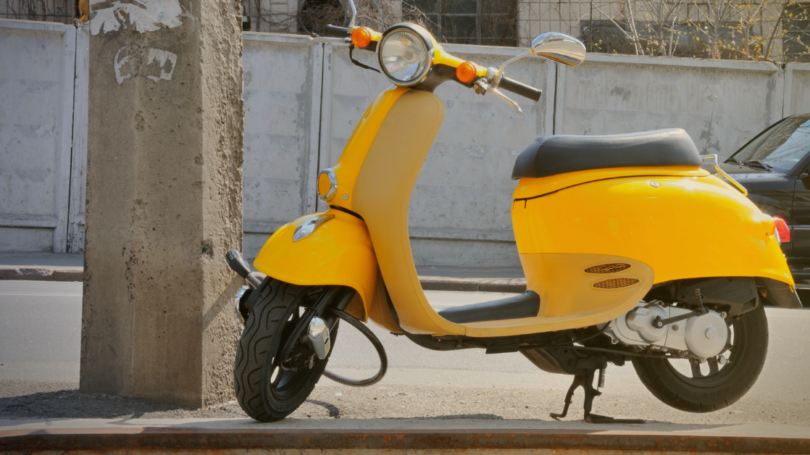
A scooter is a two-wheeled motor vehicle known for its step-through frame, seat, smaller wheels, and easy handling. Unlike many motorcycles, scooters are often designed so riders can sit upright and place their feet on a flat floorboard instead of straddling the engine.
One of the most recognizable features of a scooter is its step-through frame. This design makes it easier to mount and ride, especially for people who want a more convenient and comfortable vehicle for city transportation.
Scooters also commonly have automatic transmission, which means many riders do not need to shift gears manually. This makes scooters appealing to people who want a simple ride without the learning curve of a traditional motorcycle.
Scooters can vary widely in engine size. Some have small 50cc engines designed for lower-speed city travel, while others can have engines from 50cc to 750cc or more. Larger engines can produce more power, reach higher top speeds, and may be capable of highway travel.
Scooters are often used for:
- Daily commuting
- City traffic
- Longer distances than mopeds
- Riders who want more power
- Riders who prefer automatic transmission
- Transportation that is smaller than a car but more capable than a moped
Although scooters can be fuel-efficient, they generally consume more fuel than mopeds, especially those with larger engines. Bigger scooters may offer greater range and performance, but they can also entail higher insurance costs, licensing requirements, and maintenance expenses.
Key Differences Between Mopeds and Scooters
The difference between a moped and a scooter usually comes down to design, engine size, speed, power, and legal classification. While the terms are sometimes used interchangeably, they often refer to different types of vehicles.
| Factor | Moped | Scooter |
| Engine size | Usually smaller engines | Can range from 50cc to 750cc or more |
| Speed | Built for lower speeds | May reach higher speeds depending on engine power |
| Best use | Short city trips | City rides, longer distances, and sometimes highway travel |
| Frame design | May resemble a bicycle or small motorbike | Usually has a step-through frame |
| Pedals | Some have bicycle pedals | Typically does not have pedals |
| Transmission | May vary by model | Often has an automatic transmission |
| Fuel use | Usually better gas mileage | Generally consumes more fuel than mopeds |
| Licensing | Depends on local regulations | Varies by state and engine capacity |
For many riders, the key differences are practical. A moped may suit someone who wants low-cost transportation for short trips at lower speeds. A scooter may suit someone who wants more power, more range, and the ability to keep up with faster traffic.
Do Scooters and Mopeds Require a Motorcycle License?
Licensing requirements depend on local laws, state rules, engine capacity, maximum speed, and vehicle classification. In the United States, scooter licensing requirements vary by state, so riders should not assume that the same rules apply everywhere.
In some areas, a low-powered moped may not require a full motorcycle license. However, riders may still need a valid driver’s license, registration, insurance, or a license plate. In other areas, mopeds and scooters may have stricter requirements depending on engine size and speed capability.
Scooters with larger engines may be treated more like motorcycles. If a scooter can reach higher speeds or has a larger engine capacity, a motorcycle license may be required before a person can legally operate it on public roads.
Nevada riders, in particular, should review current local laws and local regulations before riding a scooter or moped. Rules can involve several factors, including:
- Engine size
- Maximum speed
- Whether the vehicle has pedals
- Whether the vehicle is classified as a moped, scooter, motorcycle, or motorized bicycle
- Registration and license plate requirements
- Insurance requirements
- Helmet laws and safety gear requirements
Because these rules can change and vary by location, riders should confirm the requirements before they ride.
Are Mopeds or Scooters Safer?

Mopeds and scooters can be fun, accessible, and convenient, but both come with safety risks. Riders have far less protection than people inside cars, trucks, or other enclosed vehicles. Even at lower speeds, a crash can cause serious injuries similar to those seen in motorcycle accident cases.
Moped and scooter riders should wear helmets and other safety gear whenever they ride. Helmets can help protect riders from head injuries, while gloves, jackets, eye protection, long pants, and sturdy shoes can reduce the risk of injury in a fall or collision.
Safety risks may increase when riders travel near larger motor vehicles, ride in heavy traffic, or operate on roads with poor visibility. Intersections, lane changes, distracted drivers, and sudden stops can all pose dangers for scooter and moped riders.
Important safety factors include:
- Wearing helmets and protective gear
- Following traffic laws
- Staying visible to cars and other vehicles
- Avoiding distractions and improper use of communication devices
- Maintaining the vehicle’s brakes, lights, tires, and engine
- Understanding the vehicle’s speed and power limits
- Riding defensively in urban environments
Lower speeds may reduce some risks, but they do not eliminate the possibility of serious injury. Larger scooters with higher top speeds may offer more performance, but they can also expose riders to greater danger, especially on highways or busy roads.
Which Is Better for City Transportation: A Scooter or a Moped?
The better option depends on the rider’s needs, budget, comfort level, and travel habits. Both mopeds and scooters can be practical in urban environments, but they serve slightly different purposes.
A moped may be a better choice if you:
- Mostly take short trips
- Want better gas mileage
- Prefer lower speeds
- Need simple transportation
- Want a smaller, lighter vehicle
- Are looking for lower overall costs
A scooter may be a better choice if you:
- Want more engine power
- Prefer automatic transmission
- Need more range
- Plan to travel longer distances
- Want a vehicle that can handle higher speeds
- Need something more capable than a moped but smaller than a motorcycle
Cost is also an important factor. Mopeds may have lower fuel and insurance costs, but scooters can offer greater performance and flexibility. Larger engines may make a scooter more useful for longer rides, but they can also increase licensing, insurance, and maintenance requirements.
The key difference between a moped and a scooter usually comes down to engine size, speed, design, licensing rules, and how the vehicle is used.
What Should Riders Know After a Scooter or Moped Accident?
Accidents involving mopeds and scooters can be complicated. A crash may involve cars, motorcycles, bicycles, pedestrians, road hazards, or other vehicles. Because riders have limited physical protection, injuries can be serious even at low speeds.
After a scooter or moped accident, riders should take practical steps to protect their health and potential legal claim.
Important steps may include:
- Seeking medical care as soon as possible
- Calling law enforcement if there are injuries or vehicle damage
- Taking photos of the crash scene, vehicles, road conditions, and injuries
- Getting contact information from witnesses
- Preserving helmet, safety gear, and damaged vehicle parts
- Avoiding quick statements to insurance companies
- Keeping records of medical treatment, missed work, and expenses
A personal injury lawyer can help evaluate fault, damages, insurance coverage, and possible compensation after a crash. Legal issues may depend on traffic laws, insurance policies, vehicle classification, safety gear, and whether the rider was operating the scooter or moped legally.
Talk to a Personal Injury Lawyer After a Scooter or Moped Crash
Before choosing between a scooter and a moped, riders should consider engine size, gas mileage, licensing requirements, insurance costs, safety gear, local laws, and the type of roads they plan to use. Making an informed decision can help riders choose the vehicle that best suits their transportation needs while reducing avoidable risks.
If you were injured while riding a scooter, moped, motorcycle, bicycle, or another vehicle, Temple Injury Law can help you understand your legal options and next steps. Contact Temple Injury Law today to schedule a consultation and take the next step toward protecting your rights.

Jeff Temple focuses his practice in the area of personal injury. As a skilled personal injury attorney, he handles a broad range of cases including motor vehicle accidents, premises liability, and wrongful death. He is a graduate of the Radford University, he later attended the University of Miami School of Law and studied abroad at University College London. Upon graduating, Jeff relocated to Las Vegas and founded Temple Injury Law in 2022.

