
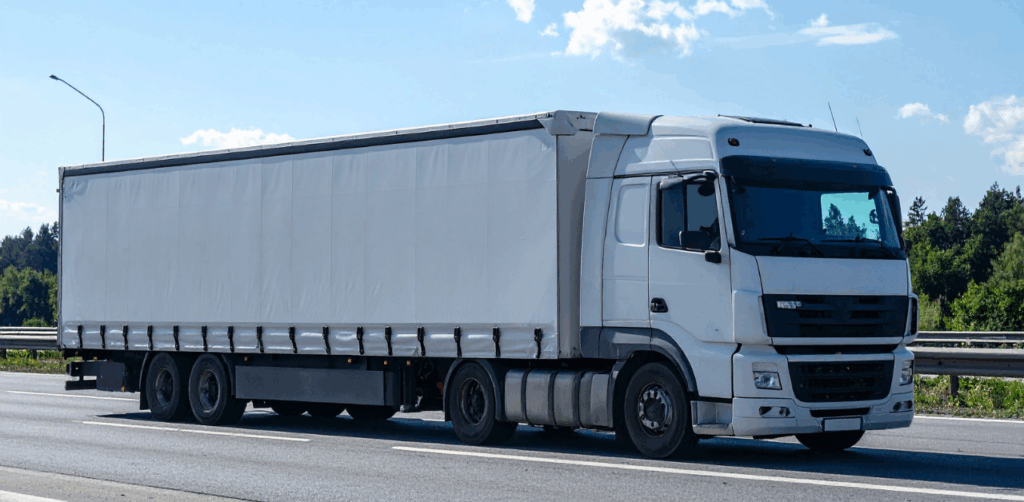
A commercial truck crash isn’t like a typical car accident. When a large commercial vehicle collides with a smaller vehicle, the consequences often include severe injuries, large medical expenses, damage to passenger vehicles, and complicated liability.
If you or a loved one has suffered serious injury in Las Vegas or Clark County involving a large truck, you must understand how truck accident liability works under Nevada law. And how an experienced truck accident attorney from Temple Injury Law can help you pursue compensation.
Federal and Nevada Rules That Apply to Commercial Truck Liability
Because commercial trucks cross state lines or operate under federal regulation, several layers of law apply:
- At the national level, the Federal Motor Carrier Safety Administration (FMCSA) establishes rules for commercial drivers, including hours of service, vehicle maintenance, and cargo securement.
- At the state level, Nevada law enforces crash reporting and the duty to stop. Under Nevada Revised Statute 484E.010, a driver involved in a crash resulting in bodily injury or death on a highway must stop immediately and remain at the scene.
- Under Nevada law, injured persons have two years from the date the injury occurred to file a personal injury claim.
- Nevada applies a modified comparative negligence rule under Nevada Revised Statute 41.141. A claimant can recover as long as their fault is less than 51 % and then their damages are reduced in proportion to their share of fault. (General liability principle in auto and truck crashes)
- For crashes resulting in bodily injury or death, a written or electronic report must be filed within 10 days under Nevada Revised Statute 484E.070.
Who Might Be Responsible in a Truck Accident Case?
In many truck crashes, multiple parties may share legal responsibility. It is never simply “the truck driver did something wrong.” Instead, a thorough investigation may reveal one or more of these responsible parties:
- The commercial driver may have committed negligence, such as distracted driving, speeding, driving under fatigue, or operating while impaired.
- Commercial trucking companies may be held liable due to hiring and training practices, supervision, dispatching, maintenance programs, or improper driver logs.
- If the truck’s cargo was overloaded, improperly secured, or the load-out caused instability, the entity that loaded or brokered the cargo may bear liability.
- If a mechanical failure (such as brakes, tires, or steering) caused the crash, the manufacturer or parts supplier may be held legally responsible for the defect.
- If the trucking company outsources maintenance and the contractor fails to keep the commercial truck properly maintained, liability may extend to that party.
- In rare cases, if a highway condition, signage, or guardrails contributed to the incident, a local government entity may share liability.
When the Truck Driver Is Held Liable

The truck driver is a central figure in most truck accident claims. Some of the common scenarios where driver negligence leads to liability include:
- Texting, eating, or engaging in any other distracted driving while operating the commercial vehicle.
- Driving while fatigued or exceeding federally allowed hours of service.
- Speeding, unsafe lane changes, or loss of control of the truck.
- Driving under the influence of drugs or alcohol.
- Failing to keep the truck properly maintained (e.g., tires, brakes) when driver inspection logs were ignored.
In these situations, an injured party has to show the driver owed a legal duty of care, breached it (by being negligent), and the breach caused the injury. For example, the truck driver failed to brake with sufficient distance, lost control, veered into passenger vehicles, and caused catastrophic injuries. The driver may be personally liable, and the trucking company may share liability.
When the Trucking Company Is Responsible
A trucking company bears significant responsibility for the safety of its fleet and drivers. In Nevada, you may hold the trucking company liable for things such as:
- Hiring drivers without adequate experience, testing, or background checks.
- Failing to train drivers on safe driving practices, hours of service compliance, or cargo securement.
- Dispatching drivers aggressively (forcing undue hours or unsafe schedules) or ignoring hours-of-service regulations.
- Improper maintenance policies, failure to inspect vehicles, or ignoring repeated defects on the truck.
- Failing to secure, inspect, or maintain cargo properly, thus making the large truck unstable and prone to rollover or jackknife.
- Insurance companies may attempt to blame the driver solely, but much of the legal responsibility may actually lie with the trucking company.
Cargo Loaders, Maintenance Contractors, Manufacturers: Shared Blame

In many commercial truck accident cases, the responsible parties extend beyond the driver and the company. For instance:
- If the truck crash occurred because the cargo shifted and caused the truck to roll over, the cargo loading company or broker may be liable for failing to secure the load properly.
- If a mechanical failure, such as brake or steering failure, caused the crash, then the truck manufacturer, parts supplier, or independent maintenance contractor may be held responsible.
- Each of these parties may have duties under federal safety regulations, industry standards, and common law, and may share legal responsibility.
By investigating all possible sources of fault, a legal team can identify all potential responsible parties, which maximizes your ability to pursue full compensation for your losses.
How Liability Is Proven in a Truck Accident Claim
Proving liability in trucking cases requires gathering strong evidence, as insurance companies and defendants often vigorously contest the claims. Here is a breakdown of how liability is established:
- Investigate the scene right away. Photograph the truck, the load, the driver’s log books, any cargo shift, and any mechanical failure.
- Obtain driver records and company logs: Hours-of-service logs, maintenance records, inspection reports, and driver training records.
- Interview witnesses and review video footage. Commercial trucks often operate with dash cams, GPS tracking, and logging systems. These records can help establish speed, route, braking, and driver actions.
- Medical documentation. Your medical bills, treatment records, diagnosis of severe or catastrophic injuries, lost wages, and future earning capacity.
- Expert input. Accident reconstruction experts, mechanical failure experts, and trucking industry standards experts.
- Insurance and claim files. Review all correspondence, demands, and settlement offers from insurance companies.
Comparative Fault: When More Than One Party Shares Blame
One of the more complex parts of truck accident liability in Nevada concerns comparative fault. You cannot recover if you are 50 % or more at fault. If you are less than 50 % at fault, your recovery is reduced by your percentage of fault.
Suppose the truck driver collided with passenger vehicles while making an unsafe lane change, and you were in a passenger car that attempted evasive action but still struck the truck. The trucking company might argue you share fault for not yielding or ignoring warning signs.
Because trucking cases often involve “multiple parties,” the defense may attempt to shift blame to you, another driver, or even road design. The legal team must therefore investigate and document your lack of fault (or minimal fault) to ensure you are not barred from recovering or significantly reduced by fault.
Effective representation will fight to show that the truck driver and/or trucking company is more than 50% at fault, so you are not disqualified, and to minimize any percentage of your fault.
Why Truck Accident Cases Often Lead to Higher Settlements than Typical Car Accidents
Here are important reasons why many commercial truck accident cases exceed typical car accident settlements:
- The size, weight, and momentum of a commercial truck can cause catastrophic injuries or fatal injuries to occupants of passenger cars and trucks.
- Medical expenses, lost wages, and lost future earnings are often significantly higher when a large truck is involved and injuries are severe.
- More parties may be liable (truck driver, trucking company, maintenance contractor, and manufacturer), which increases the potential for recovery and leverage in negotiations.
- Insurance companies for commercial trucks often involve higher policy limits and may have deeper resources.
- Defendants often fight liability aggressively, which increases the value of a well-prepared claim.
How a Truck Accident Attorney Protects Your Rights When Insurance Companies Fight Liability
When a truck accident occurs, you may be dealing with severe injuries, mounting medical bills, traffic citations, and insurance companies seeking to limit their losses. An experienced truck accident attorney will:
- Step in early to preserve perishable evidence (truck driver logs, GPS, black‐box data, video).
- Handle communication with the truck driver’s commercial insurance carrier (which may try to shift liability or blame you).
- Calculate all your losses, including future medical care, lost wages, diminished earning capacity, pain, and suffering.
- Develop a demand and settlement strategy, or prepare for trial if necessary.
- Guide you through the legal process, including time deadlines (Nevada’s 2-year limit) and court filings.
- Represent you in negotiations and, if necessary, at trial to ensure that you recover the full value of your claim, not just what the insurer offers initially.
A Better Path Forward After a Truck Accident in Nevada
A truck accident can leave you facing far more than vehicle repairs. You may be dealing with life-changing injuries, months of medical treatment, and insurance companies that care more about protecting their profit than paying a fair settlement. You should not have to manage all of that on your own, especially when multiple parties may be legally responsible.
What most people want during the legal process is clarity, consistent communication, and someone who actually takes the burden off their shoulders. That is exactly what past clients have experienced at Temple Injury Law. One recent client shared:
“Jeff handled my case extremely well and very timely. He was communicative and made the whole process a lot easier on me, I truly appreciate the service here. If you’re looking for an injury attorney I recommend Jeff definitely if you want a smooth and easy process.” — Siam Mundo
If you were hurt in a truck accident in Las Vegas or anywhere in Nevada, you still have options, but acting sooner protects your claim and preserves valuable evidence. You can speak with our legal team for free, learn how liability applies in your situation, and decide what to do next before deadlines or insurance tactics work against you.
Contact Temple Injury Law today for a complimentary consultation and discover how we can assist you in moving forward.